Who Created Bitcoin and How to Use It: A Beginner’s Guide

Bitcoin (BTC) has become a household name. People talk about it on TV, read about it in the news, and argue about it online. But what is it really? Who created the world’s first cryptocurrency — and, most importantly, how can an ordinary person start using it?
In this guide, we’ll break everything down: from the story of the mysterious Satoshi Nakamoto to practical steps for buying your very first satoshi.
Who created Bitcoin?
Bitcoin’s origin story reads like a detective novel. On October 31, 2008, a document titled “Bitcoin: A Peer-to-Peer Electronic Cash System” appeared on a cryptography mailing list. The author signed it as Satoshi Nakamoto.
Fun fact: to this day, nobody knows who Satoshi really is.
- It could be a single brilliant developer.
- It could be a team of engineers.
- Some theories even point to large corporations or intelligence agencies.
Satoshi was active in the community until 2010 — improving the code and discussing ideas — and then simply disappeared, handing project leadership to other enthusiasts. Wallets linked to Satoshi are believed to hold around 1 million BTC, and those coins have never moved.
Why do we even need Bitcoin?
Satoshi created Bitcoin as a response to the 2008 global financial crisis. The core idea was simple: money that doesn’t depend on banks or governments.
Key features:
- Decentralization: there’s no “main computer” you can switch off. The network is supported by thousands of computers worldwide.
- Limited supply: only 21 million coins will ever exist. Bitcoin can’t be “printed” like fiat money, which helps protect it from inflation.
- Pseudonymous yet transparent: names are hidden, but all transactions are visible in the public ledger.
How does Bitcoin work? (Complex made simple)
Bitcoin runs on blockchain technology. Imagine a massive accounting book that every participant has a copy of.
- When Alice sends Bob 1 BTC, that record goes into a “page” (a block).
- Special computers (miners) solve a complex math task to “seal” the block and add it to the chain.
- Once added, the record can’t be changed — which prevents fraud and double-spending.
How to start using Bitcoin
To own crypto, you need two things: a wallet and a way to buy BTC.
Step 1. Create a wallet
There are a few types:
- Hot (software) wallets: mobile apps (Trust Wallet, Exodus) or desktop apps. Convenient for frequent use.
- Cold (hardware) wallets: devices like Ledger or Trezor. The safest option for storing larger amounts long-term.
Step 2. Buy Bitcoin
You can buy BTC via:
- Crypto exchanges (Bybit, Binance): usually require identity verification (KYC).
- P2P platforms: buying directly from other people via bank transfer.
- Exchangers: simple and fast, but the rate can be less favorable.
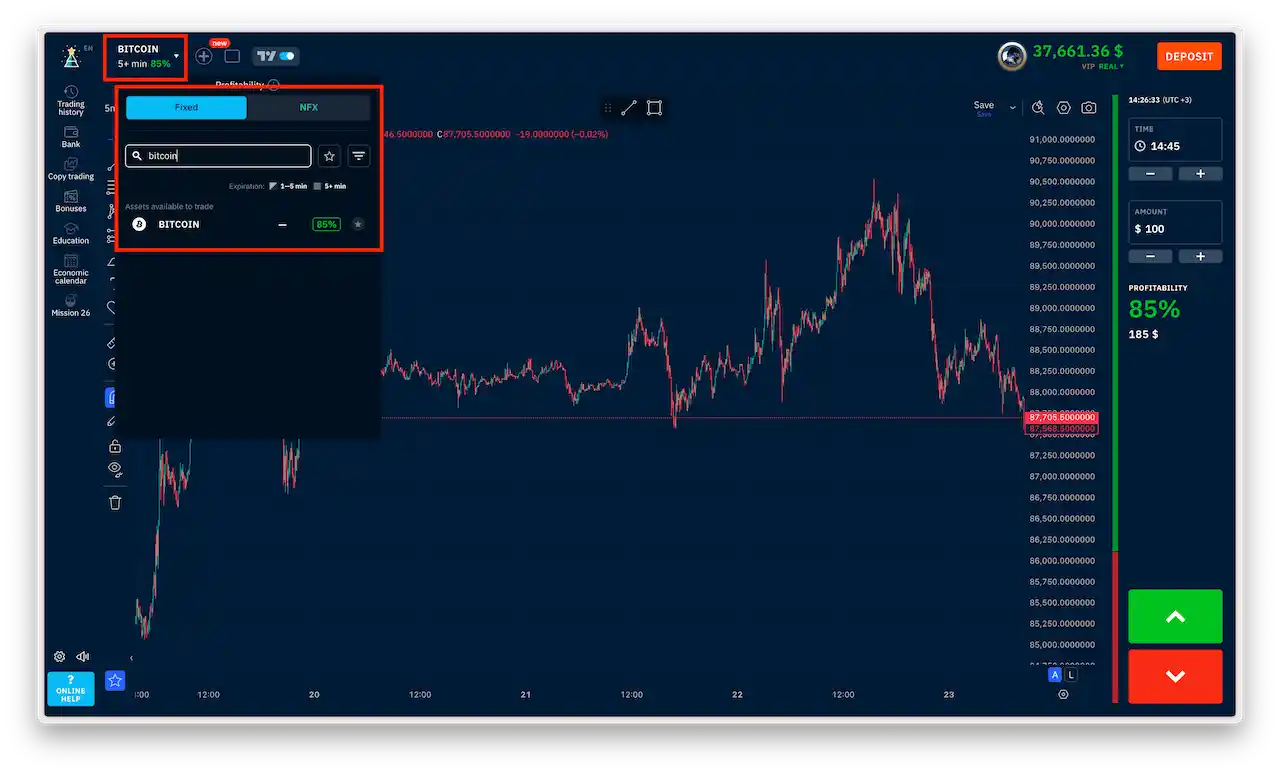
Buying Bitcoin makes sense for a 3–5 year investment horizon. But if you want to profit from price swings right now, it’s often easier to trade contracts on BTC’s price without dealing with wallets and storage.
I show how I approach it in my Telegram channel.
Risks you should know about
Crypto isn’t just opportunity — it’s risk, too.
- Volatility: price can drop 20% in a single day. If that stresses you out, it matters.
- Responsibility: if you lose your seed phrase, you can’t recover access. Funds may be gone forever.
- Irreversibility: send BTC to the wrong address — and you can’t “undo” it.
Conclusion
Bitcoin is a financial revolution. It gave people a way to own and move value without intermediaries. Created by the anonymous Satoshi Nakamoto, it went from a geek experiment to an asset that even billionaires invest in.
Starting is simple: install a wallet, buy a tiny amount, and learn the basics. Or test a trading approach that tracks Bitcoin’s price via a platform.

Want to profit from Bitcoin moves?
On Binarium, you can trade crypto without setting up complicated wallets. Use promo code TREND for a +100% bonus.