What Is Trading and Who Is a Trader: Practical Guide Since 2015

Promo code: TREND (+100% to your first deposit)
Trading means buying and selling assets on an exchange to earn from price differences. A trader is the person doing that work: finding an entry point, opening a trade, and locking in profit or loss. Behind this short definition is a full profession with its own rules, risks and real numbers. In this guide, I will explain from scratch how trading works, what a trader does, what markets and trading styles exist — and what exactly a beginner should do to start without blowing the deposit.
My name is Konstantin Gromov. I have been trading since 2015 and I run open Live trade monitoring directly on this website — you can see both wins and losses without editing. Below there are no “secret strategies” or promises of huge returns: only what I have personally tested in practice.
What trading means in simple words
Put very simply, trading is when you buy something on an exchange and sell it when the price moves in the direction you need. The difference between the buying price and the selling price is your profit — or loss if the price goes the wrong way. That is the essence of trading: earning from price movement, not producing or selling a product in the classic sense.
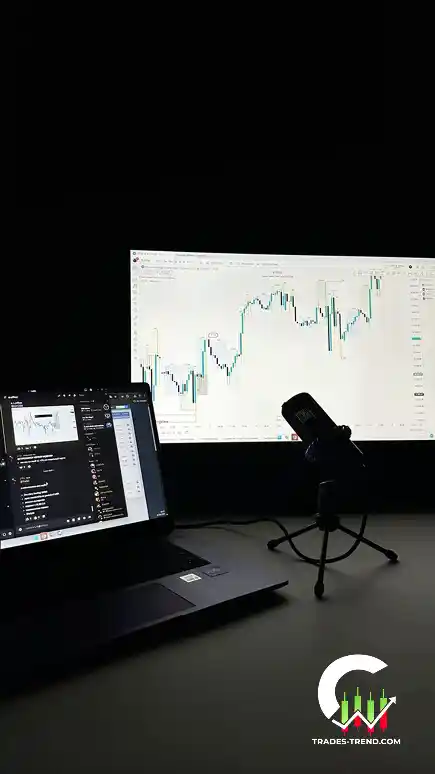
A real-life analogy is easy to understand. Imagine you went on vacation, exchanged rubles for dollars at one rate, and two weeks later exchanged the dollars back at a higher rate. You made money from the exchange-rate difference without producing anything. That is trading in simple words — only instead of a currency exchange booth there is an exchange, instead of one currency pair there may be stocks, futures or crypto, and instead of two weeks the time frame may be anything from a few seconds to several months.
Another example is reselling sneakers or electronics. You buy a new model on release day and sell it for more a month later. The mechanics are the same: a trade is a “buy cheaper, sell higher” transaction. Exchange trading is the same idea, but with financial assets and inside a clear infrastructure: exchange, broker and trading terminal.
People often ask what trading is as a phenomenon. The English word “trading” literally means commerce or buying and selling — and that is the most accurate definition. When people say “trading is buying and selling” on financial markets, they mean the process of buying and selling assets for profit. In everyday terms, the meaning is the same: transactions made to earn from price differences.
The point of trading: to earn from asset price movements. Nothing magical, no “secret schemes” — only price, time and trader decisions.
Who a trader is and what a trader does
A trader, in simple words, is a person who makes transactions on financial markets with the goal of making a profit. If trading is the process, the trader is the one who starts that process. The trader decides what to buy, when to buy, in what volume and when to close the trade. In English, a trader is literally a person engaged in trading.
A typical day for a private trader looks like this: in the morning, the trader checks the news and important events of the day, opens charts for selected instruments, finds an entry point according to their strategy, opens a trade, sets stop-loss and take-profit. After that, the trader either monitors the position or gets on with other tasks — it depends on the style. In the evening, they review the results, record trades in a journal and analyze mistakes. No magic — just routine work with charts and numbers.
It is important to separate the concepts right away. An exchange trader is not an analyst who writes market reviews, not a financial advisor who helps other people with portfolios, and not an investor. There are employed traders in banks, investment funds and prop firms — they receive a salary and trade the employer’s capital. And there are private traders — they trade professionally with their own money from home or an office.
A separate category is the currency trader, who works on Forex, and the cryptocurrency trader, who trades on crypto exchanges. The logic is the same; only the instruments and markets differ. A stock trader works with shares on stock exchanges — for many beginners this is the easiest starting point to understand. In short: a trader is a person for whom the market is the workplace and trades are the way to earn.
How a trader differs from an investor
“Trading or investing” is one of the most common questions because these concepts are constantly confused. The difference is fundamental: an investor buys an asset to hold it for years and earn from long-term growth and dividends. A trader works on shorter time horizons and earns from price fluctuations — the trader does not care whether the company is “good” or “bad”; what matters is where the price may go in the next minutes, hours or days.
| Parameter | Trader | Investor |
|---|---|---|
| Trade horizon | Seconds — months | Years, decades |
| Goal | Price difference | Capital growth and dividends |
| Decisions | Charts, levels, news | Reports, business fundamentals |
| Time per day | From 30 minutes to 8 hours | Minutes per week |
| Risk level | High | Moderate |
| Instruments | Currencies, futures, stocks, crypto | Stocks, bonds, ETFs |
In essence, trading and investing are different approaches to the same markets. You can combine them, but it is better to start with one approach; otherwise everything turns into confusion.
How trading works: exchange, broker, trade
To understand how trading works, you need to understand three elements: the exchange, the broker and the trading terminal. Without any one of them, a private trader cannot trade.
What an exchange is and why it is needed
An exchange is a venue where buyers and sellers meet and where a fair price is formed. Volumes are huge: the Moscow Exchange lists Russian stocks and currencies, SPB Exchange provides access to some foreign securities, NYSE and NASDAQ list shares of U.S. companies, and crypto exchanges like Binance list cryptocurrencies. The exchange guarantees that a transaction can happen: if you click “buy” and someone else clicks “sell” at the same price, the system matches the orders automatically.
A separate note about a binary options exchange: it is not exactly an exchange in the classic sense, but a broker’s trading platform where you enter a deal not with another trader, but with the operator itself. I broke down this point in detail in the article “Binary options exchange and the binary options market” — worth reading if you plan to start with binary options.
The role of the broker
A private individual cannot simply walk into an exchange — access is available only to licensed companies. That is where the broker comes in: an intermediary that sends orders to the exchange on your behalf and charges a commission for it. You open an account with a broker, transfer funds, get access to a trading platform — and through it you click “buy” and “sell.” Platforms differ: MetaTrader, QUIK, TradingView, brokers’ own terminals. The idea is the same: it is the window through which you see the market and send orders.
There is also the separate concept of a trading company. In short, it is an organization that professionally trades financial markets — either with its own capital (prop trading) or by managing client money. So a trading company and a broker are not the same thing: the first trades itself or hires traders; the second simply provides access to the exchange.
What one trade looks like from start to finish
Here is how trading works from the inside — step by step:
- The trader opens the instrument chart in a trading terminal.
- According to their strategy, the trader finds an entry point — for example, the price breaks an important level.
- The trader clicks “buy,” sets the volume, and places stop-loss and take-profit.
- The order goes through the broker to the exchange, where it is matched with the opposite order — the trade is opened.
- The trader monitors the position: either closes it manually according to the plan or waits for the orders to trigger.
- The result is a plus or minus on the account after broker commission.
If you want to learn how to find such entry points systematically instead of guessing by eye, read the breakdown of a 6-step algorithm and 3 working setups — it is built around specific conditions.
What traders trade: types of exchange trading
What do traders trade? Beginners ask this first. The answer: almost anything that has a price and liquidity. Let’s look at the main types of exchange trading to understand what instruments exist.
Stocks. Shares in publicly traded companies. The easiest asset to understand: you buy a small piece of Sber, Gazprom, Apple or Tesla. The price reacts to reports, news and market sentiment.
Currency market (Forex). Trading currency pairs — euro/dollar, dollar/ruble and so on. It is the most liquid market in the world and works 24 hours a day, five days a week. Many people come here because the entry barrier is low.
Cryptocurrencies. Bitcoin, Ether and thousands of other coins. The market works 24/7 and has high volatility. A cryptocurrency trader is a separate subcategory, especially among younger audiences who entered the market through crypto.
Futures. Contracts for the future purchase or sale of an asset at a pre-agreed price. This instrument is more complex than stocks, but it provides built-in leverage and the ability to trade price declines.
Options and binary options. An option is the right, but not the obligation, to buy or sell an asset at a fixed price. Binary options are a simplified version: you forecast only the direction — up or down — over a set period of time. If you are right, you receive a fixed payout; if you are wrong, you lose only the amount of that specific trade. The risk is known in advance, which is why binary options often become an entry point into trading for beginners — they are easier to understand than futures or margin Forex. I explained the mechanics and the differences from classic options in the article “Binary options in simple words”.
These five areas cover the main types of trading by instrument — everything else is basically a subcategory. You may also see “financial trading” used broadly for anything related to financial markets and “exchange trading” as a synonym for trading through official exchanges.
How traders make money and why many lose
The beginner’s main question is how to make money from trading. The earning mechanism is simple: profit is the difference between the buying price and the selling price, minus broker commission.
But there is a nuance. On the exchange, you can earn not only when prices rise, but also when they fall. For this, there are two concepts:
- Long — you buy an asset expecting it to rise. Bought at 200, sold at 210 — made a profit.
- Short — you sell an asset you do not own, expecting it to fall so you can buy it back cheaper. Formally, you borrow the asset from the broker, sell it at the current price, and then buy it back. The difference is yours.
Leverage is a separate topic. It is when the broker allows you to open a position larger than the money you actually have. With 1:10 leverage, you can buy 100,000 ₽ worth of shares with only 10,000 ₽ in your account. It sounds attractive, but it works both ways: both profit and loss are multiplied. Beginners often blow their deposits specifically because of leverage.
Example of a conditional trade. A trader bought 100 shares at 200 ₽ and spent 20,000 ₽. One hour later the price rose to 205 ₽, and the trader closed the position — receiving 20,500 ₽. Profit: 500 ₽ minus broker commission. If the price had fallen to 195 ₽ and the stop-loss had triggered, the loss would also be 500 ₽ plus commission. The numbers are conditional, but the principle is exactly this.
Now the honest part. Most retail traders lose money in their first year — regulator reports confirm this. The reasons are simple: no plan, emotional trades, ignoring risk management, misunderstanding leverage and trying to win back losses. This does not mean trading is a scam. It means trading requires time to learn and discipline. On my website, there is open monitoring of real trades — there you can see both winning and losing streaks without editing, so you understand what a normal working process looks like, not a picture where “every day is only profit.”
Types of trading by style
Types of trading are divided not only by markets, but also by style — by how long a trade remains open. This determines how many hours per day you need to sit at the terminal. Below are four styles used by real practitioners, covering about 95% of all trading approaches.
| Trading style | Trade duration | Time at the terminal | Best suited for |
|---|---|---|---|
| Scalping | seconds — minutes | the whole working day | very fast and disciplined traders |
| Day trading | within one day | several hours per day | active people ready for stress |
| Swing trading | days — weeks | 30–60 minutes per day | beginners and people with a job |
| Position trading | weeks — months | a couple of hours per week | patient, analytical people |
There is no single “correct” style — they fit different personalities and lifestyles. Beginners are usually advised to start with swing trading: it does not require constant screen time and gives you time to think through each trade.
Every style needs its own trading system: a set of rules for entry, exit, position management and risk. Without a system, trading turns into guessing, so the strategies section is required reading for anyone taking this seriously.
Is trading a profession?
Trading is a profession, but with an important caveat. The phrase “trader as a profession” has two different meanings.
The first is an employed stock or exchange trader working inside a bank, investment fund or prop company. This is a full-time job with formal employment, salary, KPIs and the employer’s capital. These traders pass interviews and receive bonuses for results. This is a profession in the pure sense.
The second is a private trader who starts from scratch and trades their own money from home. Formally, this is also trading, but in practice it is closer to a small business: you are your own boss, you carry the risks, and there is no income guarantee. Trading as an independent activity is a business, not a salaried job. Calling it “remote work” is only partly accurate — there is no salary here, only the result of your trades.
If you are looking for a way to earn remotely and are thinking about trading, do not treat it as an alternative to a regular job during the first months. Treat it as a second activity alongside your main income — one that may become your main activity if everything works out.
How a beginner should start trading: 7 steps
There is a sea of advice online about “trading for beginners,” and half of it is garbage. Here is the working minimum. It fits beginner stock traders and those who start with Forex, crypto or binary options. Theory is good, but without practical steps it does not work.
- Learn the basic terms. Exchange, broker, asset, spread, leverage, stop-loss — this is your minimum. If you do not understand a word, Google it or check the glossary below. This is the language of the market. Basic materials are collected in the beginner section.
- Choose one market. Do not try to trade stocks, crypto and currencies all at once. One market at the start is more than enough.
- Choose a platform. Criteria: transparent payouts, proper support, a small starting amount and a free demo account. For binary trading, I recommend Binarium — all my breakdowns and Live sessions take place there. If you want to compare it with alternatives, see the broker reviews.
- Open a demo account. This is an account with virtual money where everything looks like the real market, but you risk nothing. Binarium registration takes about a minute and immediately gives you a demo balance. Trade only on demo for at least one or two months — it is a free way to make your first mistakes. With the TREND promo code, you also double your first real deposit when you are ready.
- Create a simple trading plan. What you trade, what signals you use for entries, where you place a stop, where you take profit, and how much you risk per trade. Without a plan, trading turns into roulette.
- Learn money management. A common approach is to risk no more than 1–2% of the deposit on one trade. This rule protects the deposit from being wiped out after a losing streak. A detailed breakdown with calculations is in the article “Money management for binary options”.
- Start with an amount you are not afraid to lose. No credit money, borrowed money or “last” money. Your first real deposit is a payment for learning, not an investment into a guaranteed bright future.
Trading risks and myths
Main risks
- Losing the deposit. The most obvious risk: the market moves the wrong way, no stop is placed — the money runs out.
- Leverage risk. With leverage, the loss may exceed your deposit and the broker may require additional funds.
- Psychological mistakes. Greed, fear, attempts to win back losses and emotional trading destroy more deposits than bad strategies. The separate risk and psychology section is required reading.
- Scammers. Paid Telegram “signals” with guaranteed returns, “gurus” with closed chats, fake brokers — all of this targets beginners first.
- Technical failures. A terminal may freeze, or the internet may go down. Professionals account for this; beginners usually do not.
Myths and reality
| Myth | Reality |
|---|---|
| “You can get rich quickly from trading” | Most beginners lose money in their first year — stable income comes only after months of learning |
| “You need secret strategies and signals” | The key is a simple plan, risk management and disciplined execution; “secrets” are usually sold by scammers |
| “Trading is a casino” | With a systematic approach, it is a business with controlled risk; without a plan, it really turns into gambling |
| “You need to be a mathematician to trade” | Anyone can learn the mechanics; the key is emotional control and following your own rules |
| “The higher the leverage, the higher the profit” | Leverage multiplies profit and loss equally; it is one of the main reasons beginners blow their deposits |
Many people think trading is hard in the sense that you “need to be a mathematician.” In reality, the main difficulty is not formulas, but discipline and emotional control. Anyone can learn the mechanics of a trade, but not keeping a losing position open out of hope that “it will come back” is a skill that takes years to develop. In this sense, technique in trading is not about indicators, but about disciplined execution of your own rules.
Can trading become remote work? Honest expectations
Many people come to trading because of the idea of “working for yourself from home.” Technically, it is possible: a laptop, internet connection and a broker account — and you are already in the market from anywhere. But let’s be honest about expectations.
Private trading is a business, not a salaried job. In business, there is no guaranteed income — there is only the result. The first months are not about earning; they are expenses: time and money spent learning, plus the first mistakes in the real market. Stable income appears for those who pass through this stage.
Trading is definitely not suitable right now for:
- people who need guaranteed monthly income;
- people planning to deposit their last money or borrowed money;
- people who are not ready to learn and keep a trade journal;
- people looking for a “money button” and not ready for months of training.
If trading does not work for you, it is not the end — nearby niches include analytics, education, financial content and jobs in brokerage companies. The field is much broader than simply sitting at a terminal.
Mini glossary: 12 terms for beginners
| Term | Meaning |
|---|---|
| Exchange | A licensed venue where buyer and seller orders are matched and price is formed. |
| Broker | A licensed intermediary through which a private trader gets access to the exchange. |
| Asset | An instrument being traded: stock, currency, future, cryptocurrency or option. |
| Trade | A “buy — sell” transaction with profit or loss fixed at the end. |
| Long | A buying position opened with the expectation that the price will rise. |
| Short | A selling position opened with the expectation that the price will fall — the asset is borrowed from the broker. |
| Spread | The difference between the current buying and selling price of an asset. |
| Stop-loss | An order that automatically closes a trade at a predefined loss. |
| Take-profit | An order that automatically closes a trade when the target profit is reached. |
| Leverage | The ability to open a position larger than your deposit using broker funds. |
| Volatility | The range of price fluctuations of an asset over a selected period. |
| Deposit | The trader’s own funds in an account with a broker. |
Chart analysis, candlestick patterns and indicators are the next level, and those materials are collected in the “Charts and Indicators” section.
FAQ: common questions about trading
What is trading in simple words?
Trading is buying and selling assets on an exchange in order to earn from the price difference. A trader buys cheaper and sells higher; the difference after broker fees becomes the profit. Everything happens through a licensed broker inside a trading terminal.
Who is a trader and what does a trader do?
A trader is a person who earns from deals with assets on financial markets. A trader analyzes charts and news, looks for entry points, opens and closes positions, and controls risk. There are employed traders in banks and private traders who trade their own capital.
How is trading different from investing?
An investor buys assets for years and earns from long-term growth and dividends. A trader works on shorter time horizons and earns from price fluctuations. Trading has higher risk and requires more time.
How much money do you need to start?
Formally, many brokers allow opening an account with a small amount. On Binarium, registration is free and there is a demo balance. The main rule is to deposit only money you can calmly afford to lose.
Can a beginner make money from trading?
In theory, yes. In practice, most beginners lose money in their first year. It is wiser to treat the first months as training, not as a source of income. Stable earnings come to those who pass through this stage.
Is trading legal in Russia?
Yes, trading on an exchange through a licensed broker is fully legal. Income is taxable; in many cases, the broker withholds personal income tax as a tax agent.
Is trading a scam or a casino?
In essence, it is neither. Markets, trades and money are real. But without knowledge, a plan and risk management, trading quickly turns into a game of luck.
How much time per day does trading take?
It depends on the style. Scalpers and day traders spend hours at the terminal. Swing traders may need 30–60 minutes. Position traders may need a few hours per week. Beginners should also add time for reading and trade review.
Do you need a degree to become a trader?
A specialized degree is not required. Most practicing private traders are self-taught and learned through books, courses and demo accounts.
Where should I start today?
Not by opening a real-money account. Start with basic beginner articles. Then use a demo account on Binarium and practice without money for at least a couple of months. Move to a real account only when you have stable results on demo.
This guide is only a starting point. The logical next path is to understand how the binary options exchange works, master money management and learn how to find entry points using specific setups. Trading is a real earning tool, but not a “money button”: it is a skill built through time, discipline and honest review of your mistakes. If you are ready to start, open a demo account on Binarium, test the mechanics without risk and join the Telegram channel with Live sessions and free signals. When depositing, use the promo code TREND — it doubles your first deposit. And if you want to see how I trade in real time, visit the Live trade monitoring — everything is transparent, without editing.
Ready to apply this knowledge in practice?
Fund your Binarium account and use the promo code TREND to get a +100% bonus and test your strategy.