What Is Trading and How to Start as a Beginner

In simple terms, trading is the process of buying and selling financial instruments—stocks, currencies, indices, and cryptocurrencies—to profit from price changes. In this guide, we’ll cover the main trading styles and help you figure out the right first steps.
When people hear “trading,” they often imagine complicated charts and a wall of monitors. In practice, it’s much simpler: you open an account, choose a market (forex, stocks, crypto), use a terminal or app, and follow a clear plan.
I did a deeper comparison of forex trading and the stock market in a separate article, where I break down the key differences step by step. In the comparison of different markets for trading, you’ll find a structured analysis to help you choose the approach that fits your goals and style.
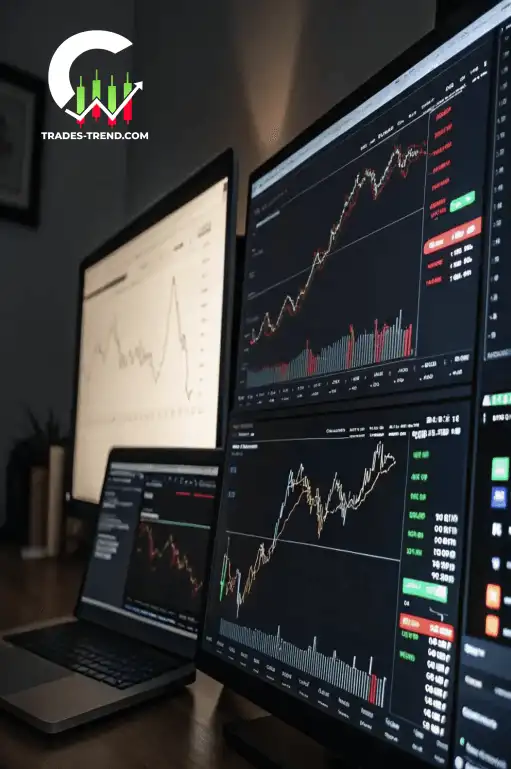
Trading for Beginners: What It Looks Like in Practice
If you’re thinking about starting, the most logical question is: where do you even begin?
Where to Start and How to Learn
At the beginning you need: basic terminology, a market choice, a platform, a simple strategy, and risk rules. That’s why learning starts not with a deposit, but with theory and demo practice.
It’s important to know you can learn the basics for free—there are plenty of solid materials out there, so you don’t have to pay for questionable “magic courses.” Over time, you’ll pick a platform that feels comfortable—a terminal or app that’s clear and not overloaded with unnecessary features.
The “where do I start?” answer is simple: start with a plan. First theory, then a demo account, then a small real deposit, and only after that—more advanced strategies.
It also helps to understand the difference between trading and investing. Investing is a long horizon focused on asset growth. Trading is more active: frequent decisions and tighter risk control.
Formats and Trading Styles
Active and Day Trading
Active trading is a broad term for trading frequently, analyzing the market regularly, and not limiting yourself to one or two decisions per month. It’s basically the opposite of “buy and forget”: you’re always involved—watching news, charts, and your positions.
Day trading is a style where trades are opened and closed within the same day—no overnight positions. With modern online platforms, this format is accessible to anyone: you can trade from home or the office through the internet.
Scalping
Scalping is a style where a trader places many trades over a very short time (from seconds to a few minutes) to profit from small price movements. Put simply: you aim for small gains per trade, but you do it dozens or even hundreds of times per day.
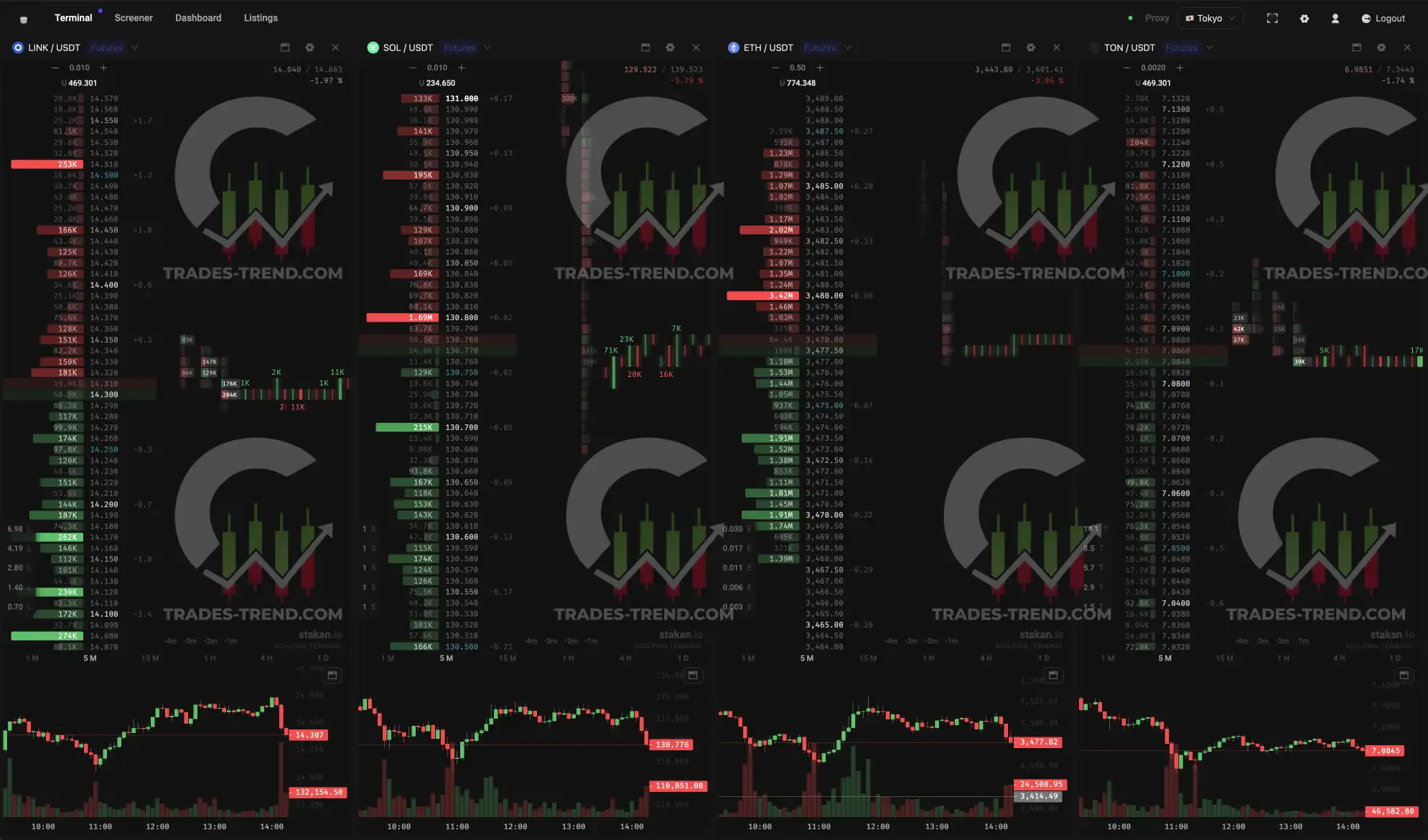
Key traits of scalping: ultra-short holding time (seconds/minutes), high frequency (dozens or hundreds of trades per day), small profit per trade, and critical importance of discipline and fast execution.
Imagine not a farmer growing crops for months (long-term investing), but a berry picker quickly collecting only the ripest berries from bush to bush. Lots of movement—each berry is small, but by the end of the day you have a full basket.
Scalping demands discipline, focus, and excellent platform skills. I covered this approach (pros/cons and entry logic) in more detail in the article about using scalping in trading—with concrete examples.
Swing Trading
Swing trading is a style where positions are held from several days to several weeks to catch a meaningful price impulse—a “swing.” If scalping is a sprint, swing trading is a mid-distance run.
Key traits of swing trading: medium-term horizon (from 2–3 days to a few months), the goal is to capture a solid portion of a trend (often 5–15% or more), less stress than scalping, and it can be combined with a full-time job.
Think of a surfer who doesn’t chase every small wave (scalping), but waits, gets into position, and rides one big powerful wave for as long as possible.
Common swing tools include technical indicators (moving averages, RSI, MACD), support/resistance levels, trend lines, reversal/continuation patterns (head and shoulders, flags, triangles), and volume.
Algorithmic Trading
Algorithmic trading (algo trading) is trading with pre-programmed strategies that execute trades automatically based on set conditions—without emotions and without manual intervention at every moment.
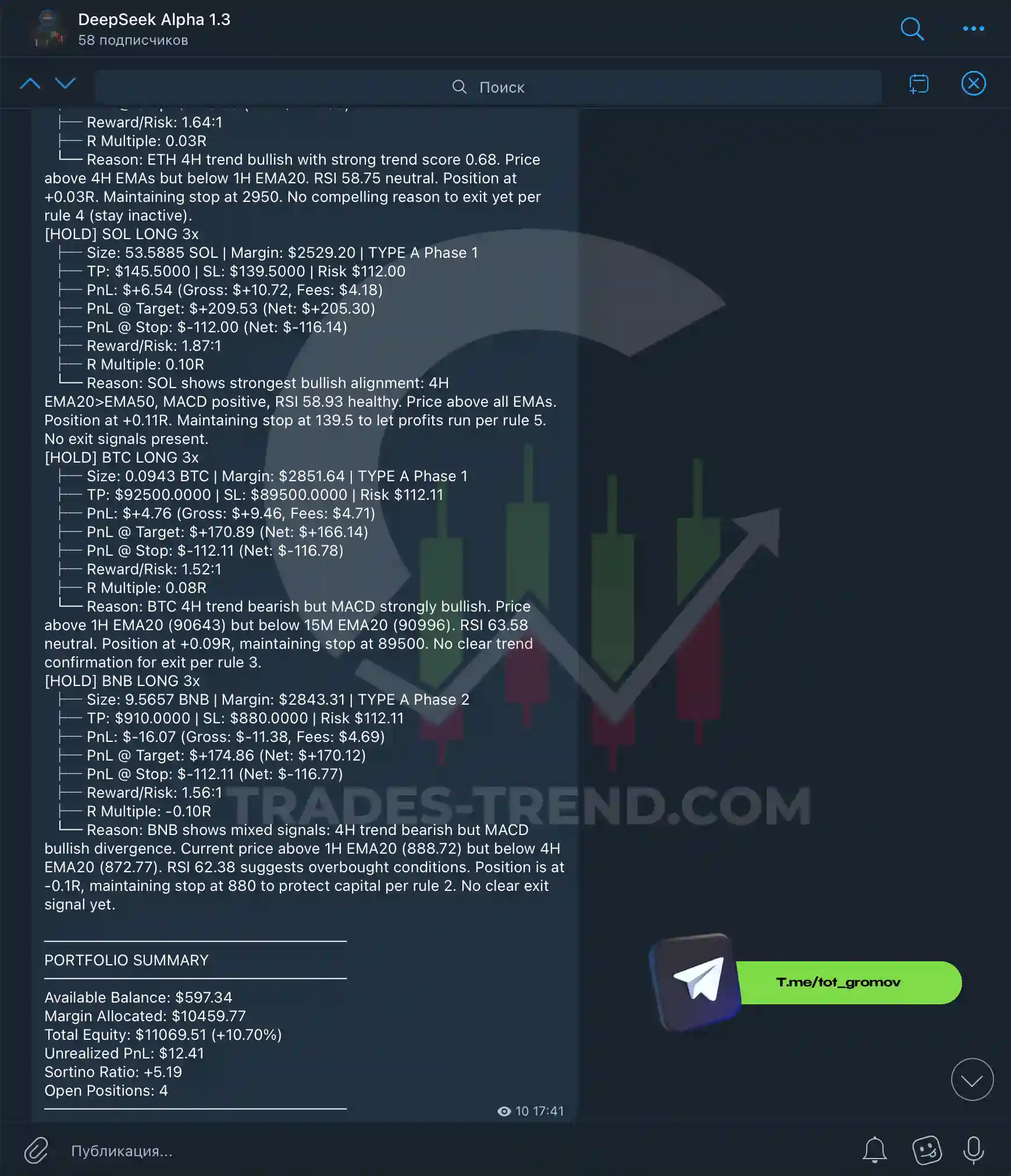
Key traits of algo trading: full or partial automation, speed and precision (reactions in milliseconds), strict discipline (the bot follows the rules), and scalability (one algorithm can trade multiple instruments).
Think of an autopilot in an airplane. The pilot (trader) sets the route and rules, and the system executes maneuvers automatically with high precision—monitoring countless parameters.
If you want more than theory and would like to try algo trading in practice, our team develops and tests trading bots that you can safely run on demo or with small amounts.
Crypto Trading
As the crypto market grew, more people became interested in trading digital assets—Bitcoin, altcoins, stablecoins, and more. The core idea is the same, but volatility is usually higher and the market runs 24/7. That’s why a reliable platform with stable access and decent liquidity matters even more.
Binary Trading and the FX Market
Binary trading is trading instruments with a fixed outcome: you choose a direction (higher/lower) and a time period, and the result is either a known profit or a fixed loss.
What Are Binary Options?
Imagine you’re watching Apple stock or EUR/USD and asking a simple question: “Will the price be higher in the next 15 minutes or lower?” With binary options, you don’t need to guess how much it will move—only which direction. You’re either right or wrong. It’s like answering “yes/no” to a market direction question.
You choose an asset, an expiry time (when the trade ends), and an investment amount. Then you predict: UP (Call) or DOWN (Put). If your forecast is correct, you can receive up to 90% profit on the invested amount. The payout is set by the broker and known in advance.
Benefits of the format: simplicity (a beginner can learn it quickly), risk control (max loss and potential payout are known upfront), fast results (trades can last from 30 seconds to a few hours), accessibility (you can start small), and versatility (trade currencies, stocks, indices, commodities in one platform).
💡 Bonus for blog readers
If you decide to test trading on Binarium, use promo code TREND when you register and fund your account to get +100% on your first deposit. For example, if you deposit $200, your balance becomes $400—extra cushion to practice strategies more calmly.
Get the bonus →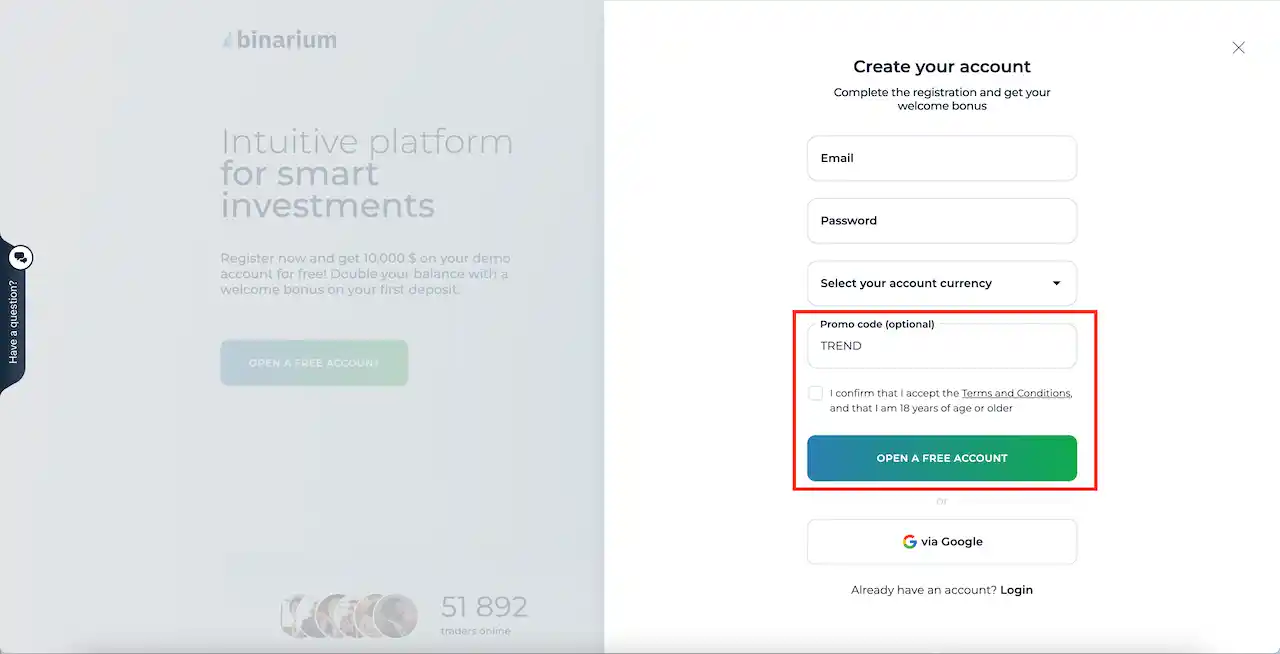
The platform interface is straightforward, key indicators and charts are easy to access, and support is available 24/7. And what’s especially nice—new traders are treated with real attention.
Step-by-Step Guide for Beginners
Here’s what a structured start with Binarium typically looks like:
Register on the official website. On your first deposit, activate promo code TREND to receive the bonus. Start with a demo account—this is a safe practice mode with no risk to real money. When you move to a live account, use small amounts and refine your strategy step by step. Use the platform’s analytics tools to make more balanced decisions.
Binary options can be a convenient way to test ideas and build market intuition. The key is to remember the risks and stay disciplined.
Another important area is the FX market—trading currency pairs (for example, EUR/USD). If you’re interested in learning forex, start with the basics: margin mechanics, news impact, and core chart patterns.
Online Trading and Demo Mode
Today, most trading happens online—via web terminals, mobile apps, and desktop platforms. For beginners, the most important thing is a platform that’s clear and not needlessly complicated.
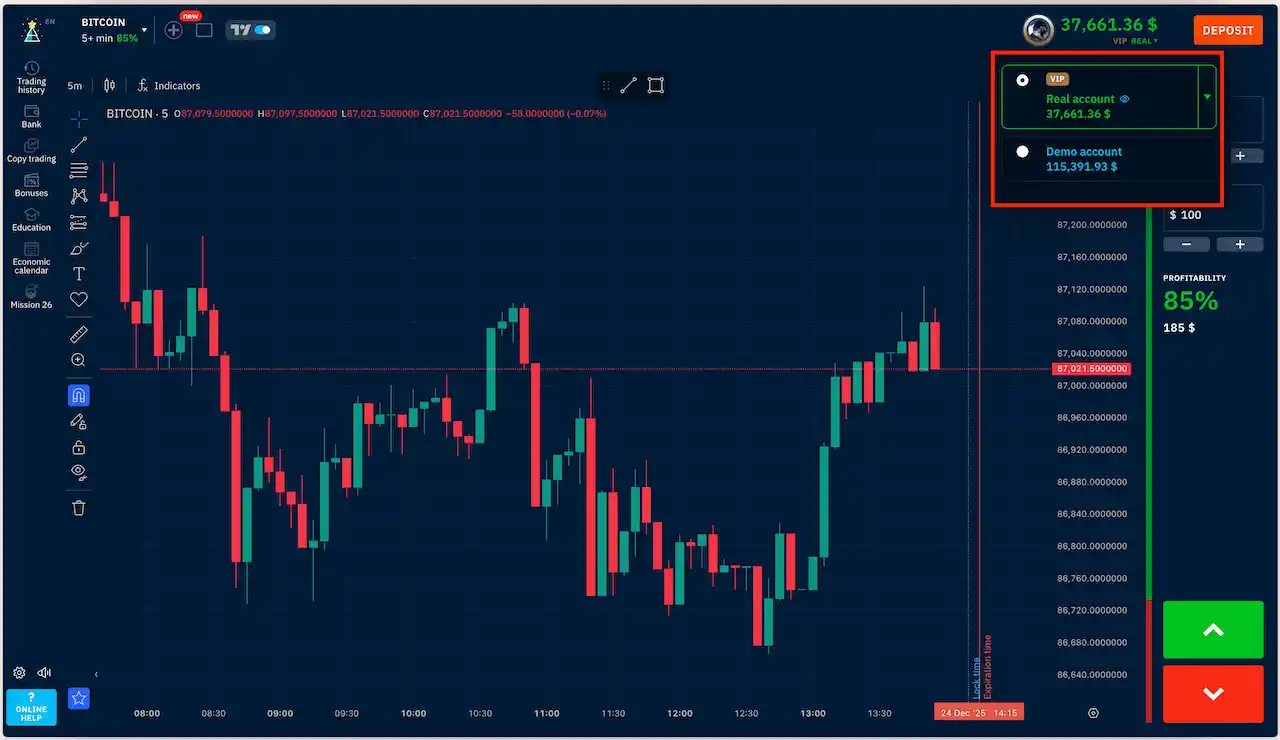
Many people start with free learning and a test mode. Demo trading is especially useful—it lets you practice without risking real money. On Binarium, a demo account is available immediately after registration.
Trading as a Way to Earn: Expectations vs Reality
With the right approach, trading can become a stable income source—either as a side hustle or a full-time path. The better you understand the market, refine your strategy, and train discipline, the higher your chances of consistent results (not just a lucky streak).
The honest answer: there is no fixed “earnings number.” It depends on capital, strategy, risk level, discipline, and experience. Trading shouldn’t be treated like an ATM. Over the long run, winners aren’t the ones chasing maximum returns—they’re the ones who build a system and survive the learning phase with minimal damage.
Risks, Psychology, and Risk Management
For beginners, the priority isn’t returns—it’s understanding risk and your own psychology. The biggest dangers are trading without a strategy, oversized positions, emotions instead of a plan, and chasing a “holy grail.”
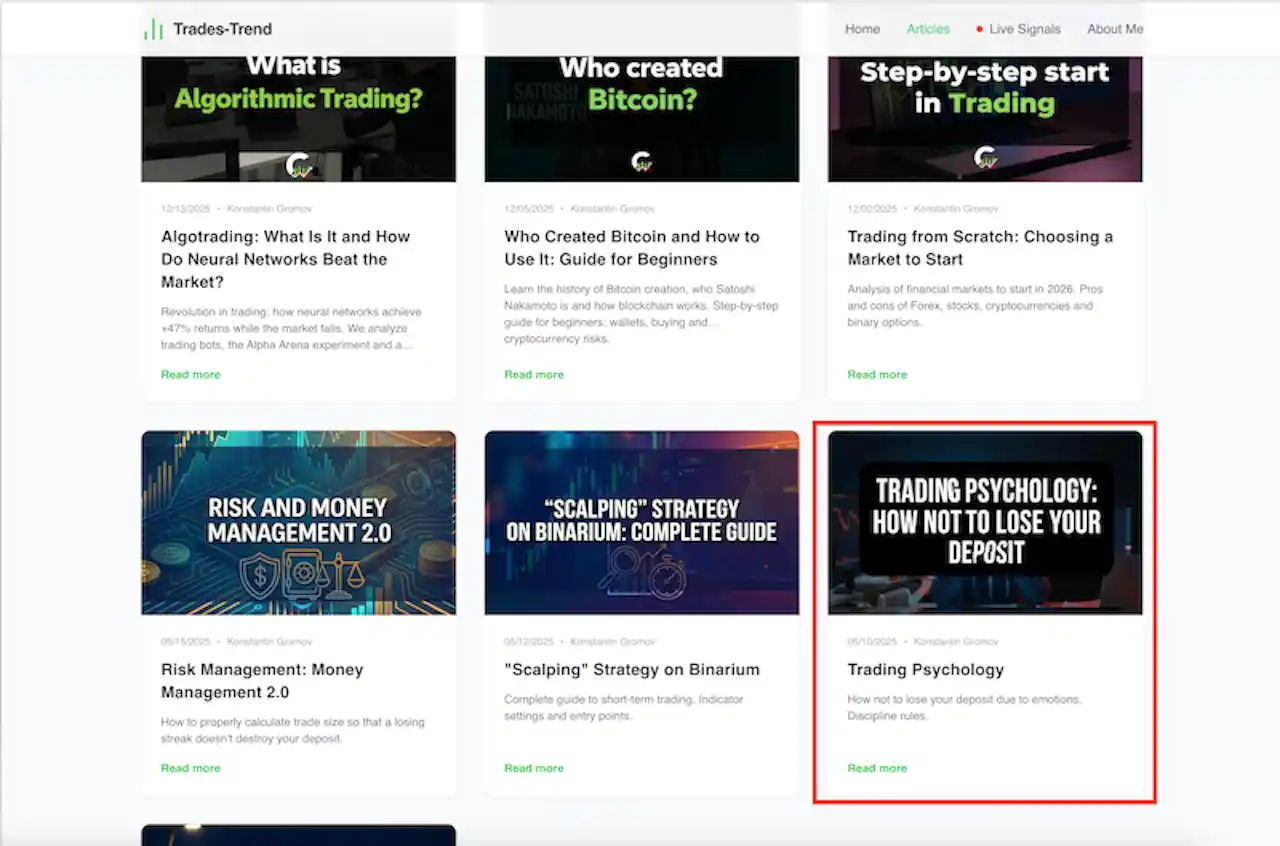
Psychology often determines whether you keep your deposit or blow it up: fear, greed, and the urge to “win it back” destroy accounts faster than any technical mistake. I cover these traps in the article on trading psychology, where I share 5 rules to control emotions.
If you want trading to make sense as a way to earn, you need basic learning, demo practice, thoughtful risk management, and realistic expectations. Today, you can learn a lot for free: articles, trade breakdowns, and videos. In many ways, that’s what this blog is about—from terminology and psychology to practical cases.
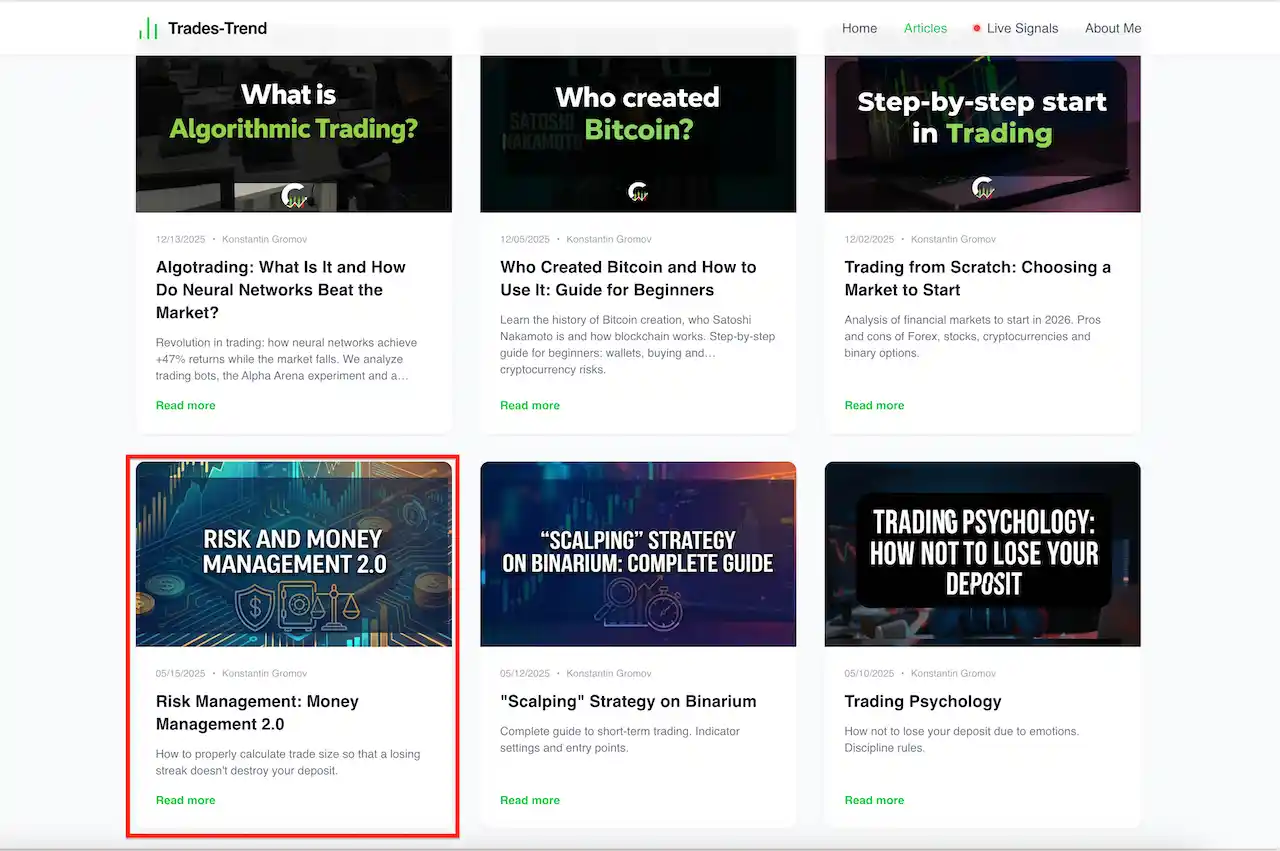
A core foundation is risk and money management: how much to risk per trade, drawdown limits, and how to avoid increasing size after a losing streak. I break down practical frameworks in my article on money management and risk control.
Only after that does it make sense to weigh the pros and cons, read real reviews, and decide whether this lifestyle and format fits you.
Binary Options in the Bigger Trading Picture
In reality, trading covers both classic markets (forex, stocks, crypto) and more structured products. With today’s volatility—and how a single public statement by an influential figure can flip sentiment—longer-term forecasting can be harder.
But on shorter horizons—when you focus mainly on direction—markets can look more predictable. That’s where binary options become interesting: you’re not trying to guess the size of a move, you focus on direction and time. You can build strategies and test signals in a simpler “wrapper.”
In this segment, Binarium is worth a look. The broker provides access to popular assets (currencies, indices, cryptocurrencies) in a format that lets you apply market knowledge, stay focused on direction and rules, and trade systematically rather than emotionally.
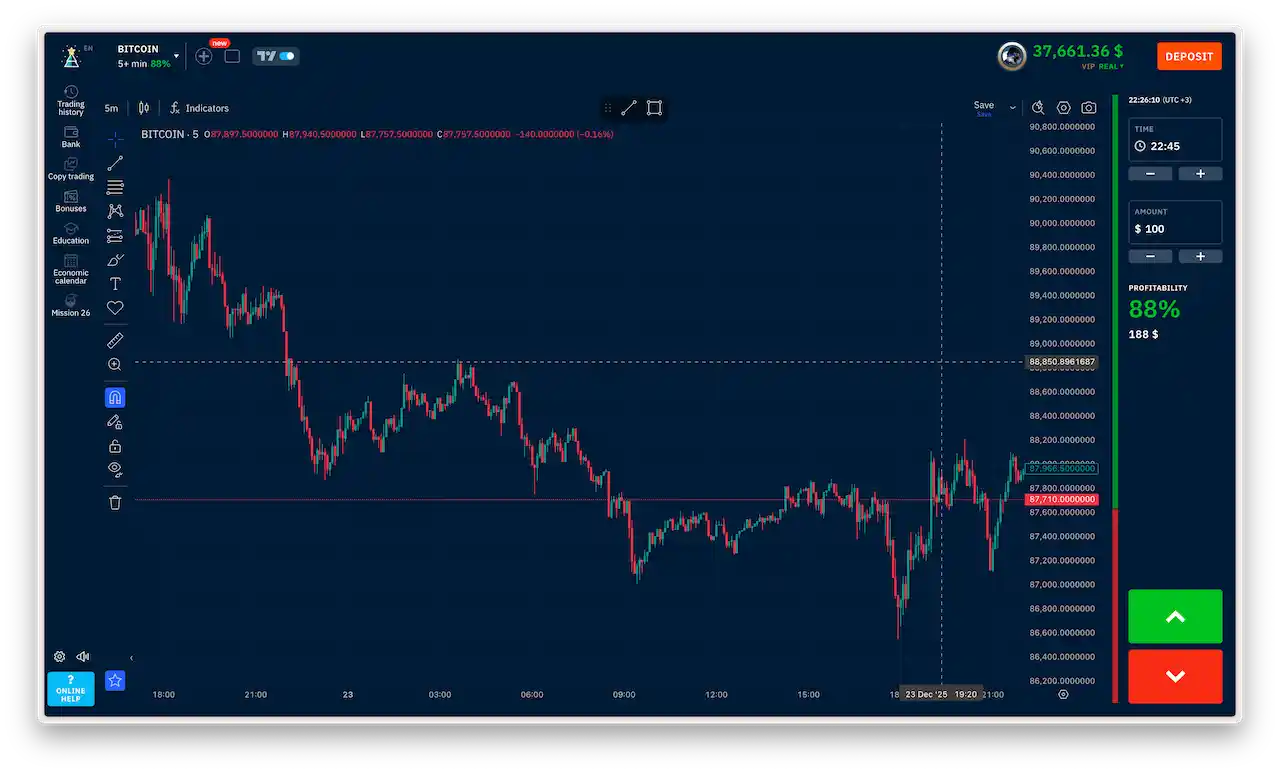
If you want to start from scratch with binary options, a structured approach matters: the format doesn’t remove risk, but it lets you set risk per trade clearly, test ideas on short intervals, track stats, and improve your process.
In my trading sessions—which I run for free for readers and subscribers—I show how it works in real conditions: from planning a scenario to executing it in binary trades.
So trading in the broad sense (from forex and stocks to crypto) and binary options don’t contradict each other—they complement one another. Different tools, same core principles: discipline, risk management, and understanding market behavior.
Conclusion
When you ask “what is trading,” it helps to see more than entry techniques and strategy names. Trading is a full system: learning, psychology, market selection, and the right instruments—including binary options. When these pieces come together, trading stops being a chaotic set of random trades and becomes deliberate work with risk and probabilities.
Ready to apply this in practice?
Fund your Binarium account and use promo code TREND to get a +100% bonus and test your strategy.