How to Start Trading From Scratch: Markets, a Demo Account, and a Learning Plan for Beginners

Quick answer: “Trading from scratch — which market should I start with?”
There are many markets, but a beginner needs one clear starting point — otherwise you get chaos, constant switching, and your first trading mistakes.
Markets differ by pace, risk, entry threshold, and the level of discipline required. Below is an honest comparison and a step-by-step plan for starting without overload.
What markets exist
- Stocks / ETFs — usually calmer pace, more logic and news-driven moves.
- Crypto — 24/7, high volatility, lots of noise.
- Forex (currencies) — liquid, but leverage and fast mistakes can “burn” a beginner without strict rules.
- Binary options — simple mechanics (“up/down” by a time), but high risk; discipline is critical.
- Derivatives (futures/CFDs) — typically more complex and riskier due to leverage and dynamics.
How to choose a market to start with: 6 criteria
- Time: can you spare 20–30 minutes daily, or only occasional bursts?
- Pace: do you want calm (stocks) or can you handle speed (crypto/Forex/options)?
- Complexity: ready to learn terminals, fees, and rules?
- Psychology: after a loss, do you stop — or feel the urge to “win it back”?
- Risk control: can you stick to limits instead of increasing size?
- Learning environment: a good demo account, charts, and analysis tools.
If you want it ultra short
For a calmer start, people often choose stocks/ETFs. Crypto is fine if you can handle 24/7 and volatility. Forex/derivatives only with strict limits. Binary options only with iron discipline and stop rules.
If you’re a beginner: where to start (step-by-step)
- Pick one market (stocks / crypto / Forex / binary).
- Open a demo account and find: asset, timeframe, and where you set size/position.
- Write 3 rules: risk per trade (small), daily loss limit, stop after a losing streak.
- Do 5 test actions just to learn mechanics (where to click, where to see results).
- Write in a journal: what you did and what confused you.
If you’re asking “what amount should I start with,” begin here: What amount to start with (deposit and risk logic).
Beginner basics: what you actually need
Most beginners don’t fail on strategy — they fail on fundamentals. The minimum that truly matters:
- what an asset is, fees/spread, volatility;
- how a trade works: entry → risk → exit;
- why limits matter and why “chasing losses” breaks your deposit;
- how to track stats (without it, everything becomes random attempts).
If you’re confused about what a broker is and why you need one: Broker (intermediary): what it is and how to choose.
How much money do you need to start trading?
It’s not about a “right number,” it’s about risk. Your starting amount should allow small position sizes and survival through losing streaks without revenge trading.
If you know you’ll increase size after a loss — build the rules on demo first. “Small deposit” doesn’t save you — risk management and discipline do.
Demo account: how to use it properly
Demo isn’t a toy to “click buttons.” It’s a habit trainer.
How to practice on demo the right way
- Trade like it’s real: fixed risk, trade limit, daily loss limit.
- Trade one idea (one setup).
- After the session: 5–10 minutes review — what followed the plan and what didn’t.
- Don’t “fight the market” after a losing streak.
A practice routine that actually works
Do 5–10 sessions of 20–30 minutes: one asset + one setup. After each session, write: 1 mistake, 1 insight, 1 rule for tomorrow.
When to move from demo to real money
You’re ready for a real account if:
- for 5–7 sessions in a row you don’t break the daily loss limit,
- you don’t chase losses (martingale/doubling down),
- you keep a journal with entry reasons and mistakes,
- you can stop.
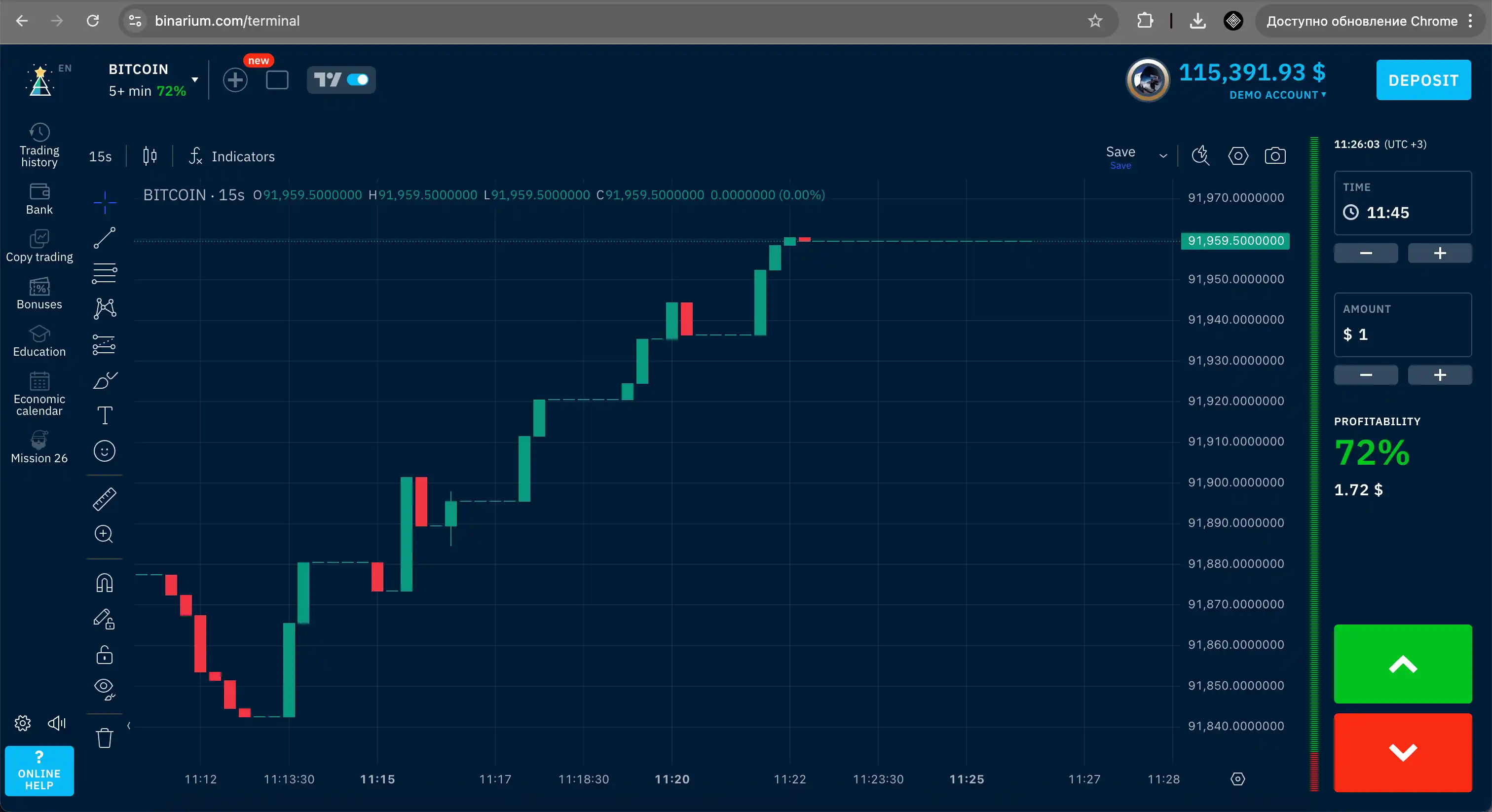
Where it’s convenient to start with demo (and why I often suggest Binarium)
- A demo account is usually available right after registration — convenient for a true “from scratch” start.
- The platform often includes TradingView tools (charts/indicators/markup) — that helps a lot at the beginning.
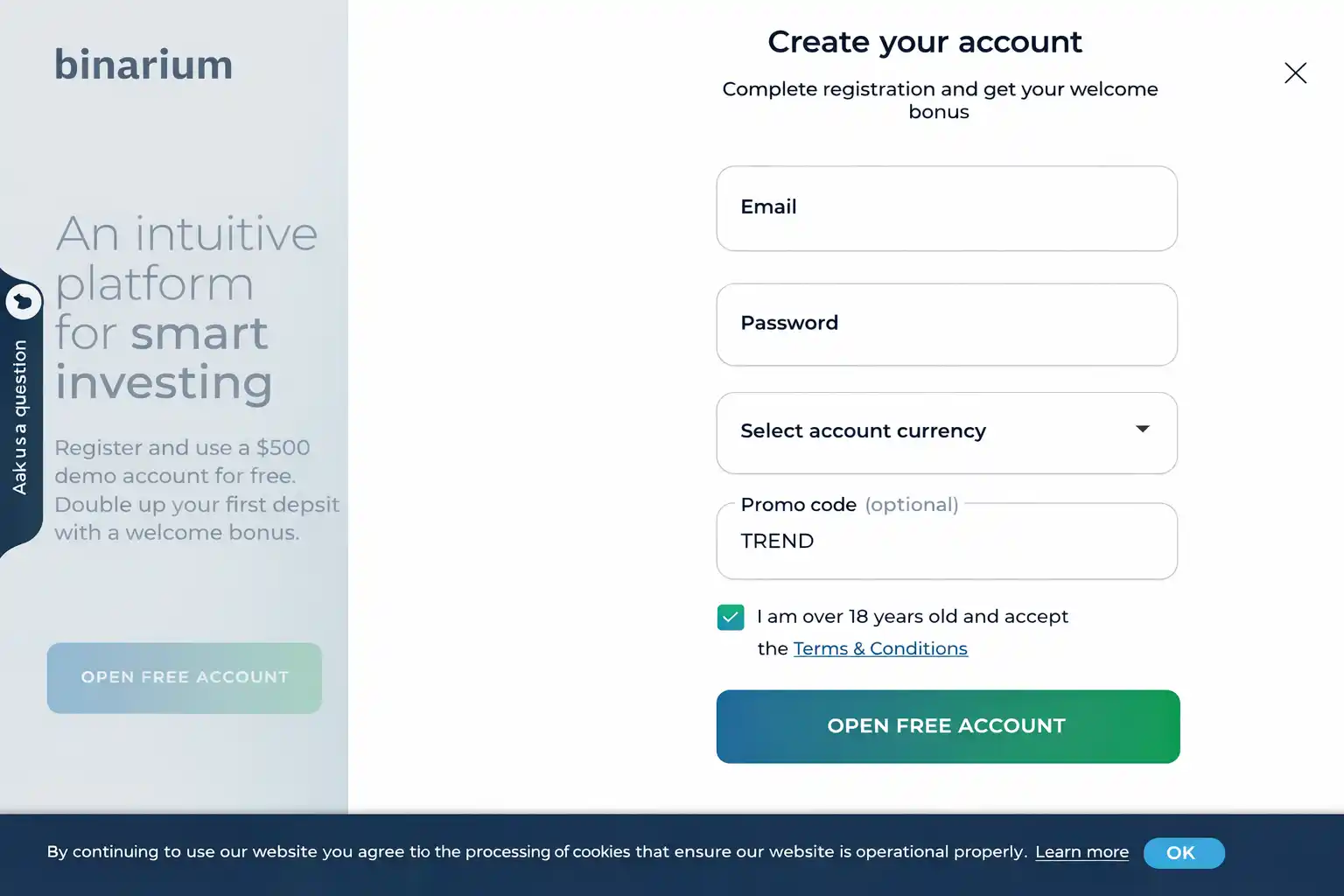
- During registration, people often use the promo code TREND — it can give a deposit bonus. Always check bonus terms and turnover requirements in your account for the current date.
Risk management: the principles you can’t survive without
Minimal risk system
- Fixed risk per trade (small).
- Daily loss limit: hit it — stop, no “one more”.
- Trade limit: prevents overtrading.
- Stop rule for a losing streak: streak hits — pause/end the day.
- No chasing losses and no increasing size after a loss.
If you want deeper examples: Risk management: money management 2.0.
Trading psychology for beginners: why “I know a lot, but results are zero”
Beginners usually lose not because “no strategy,” but because emotions take over:
- FOMO: “price is moving — I must jump in” (more here: trading psychology and FOMO).
- Tilt: “I’ll get it back right now.”
- Greed: “just a bit more and I’ll take more.”
- Fear: “I closed early and regret it.”
Checklist: STOP today if…
- you slept poorly / your head isn’t working;
- you’re angry or want to “prove something” to the market;
- you already broke your rules at least once today;
- you catch the thought “one more and I’ll recover it”.
Trading strategies: how to choose without constant switching
A beginner doesn’t need 50 strategies. You need one working format: 1 market + 1 setup + journal + 2 weeks of discipline.
A strategy is:
- entry conditions,
- when we do NOT trade,
- risk rules,
- exit rules.
If you want to level up on charting, start with Charts & indicators, then go specific: Imbalance (FVG) explained simply and Head and shoulders: entry rules. For more practice, see Strategies & practice and, for example, Scalping: a clear starting point.
How to start with stocks, crypto, Forex, and binaries: short routes
How to start trading stocks
- choose a broker/account,
- learn the terminal,
- start with liquid instruments,
- keep risk small,
- keep a journal.
How to start trading crypto from scratch (2026)
- 2FA and anti-phishing,
- don’t click suspicious links,
- don’t chase hype without a plan,
- check current exchange availability/terms for your region on the date.
How to start trading Forex
Forex is about discipline and risk. The main thing is not to play with leverage and not to try to “win back fast.”
How to trade binary options
The query “how to trade profitably” usually means one thing: increase probability, not get a guarantee. Rules and limits matter more than intuition.
LIVE sessions and signals (free)
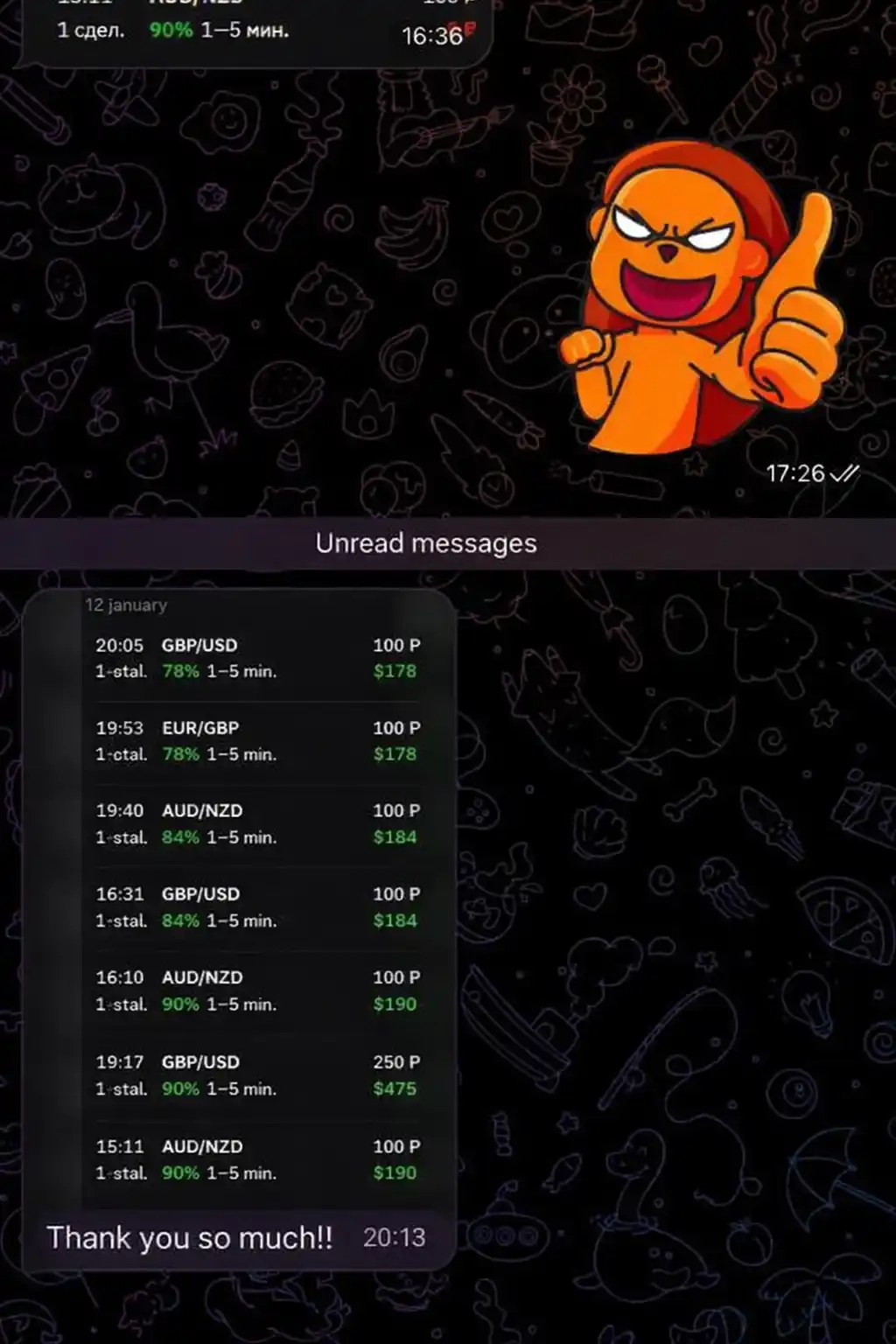
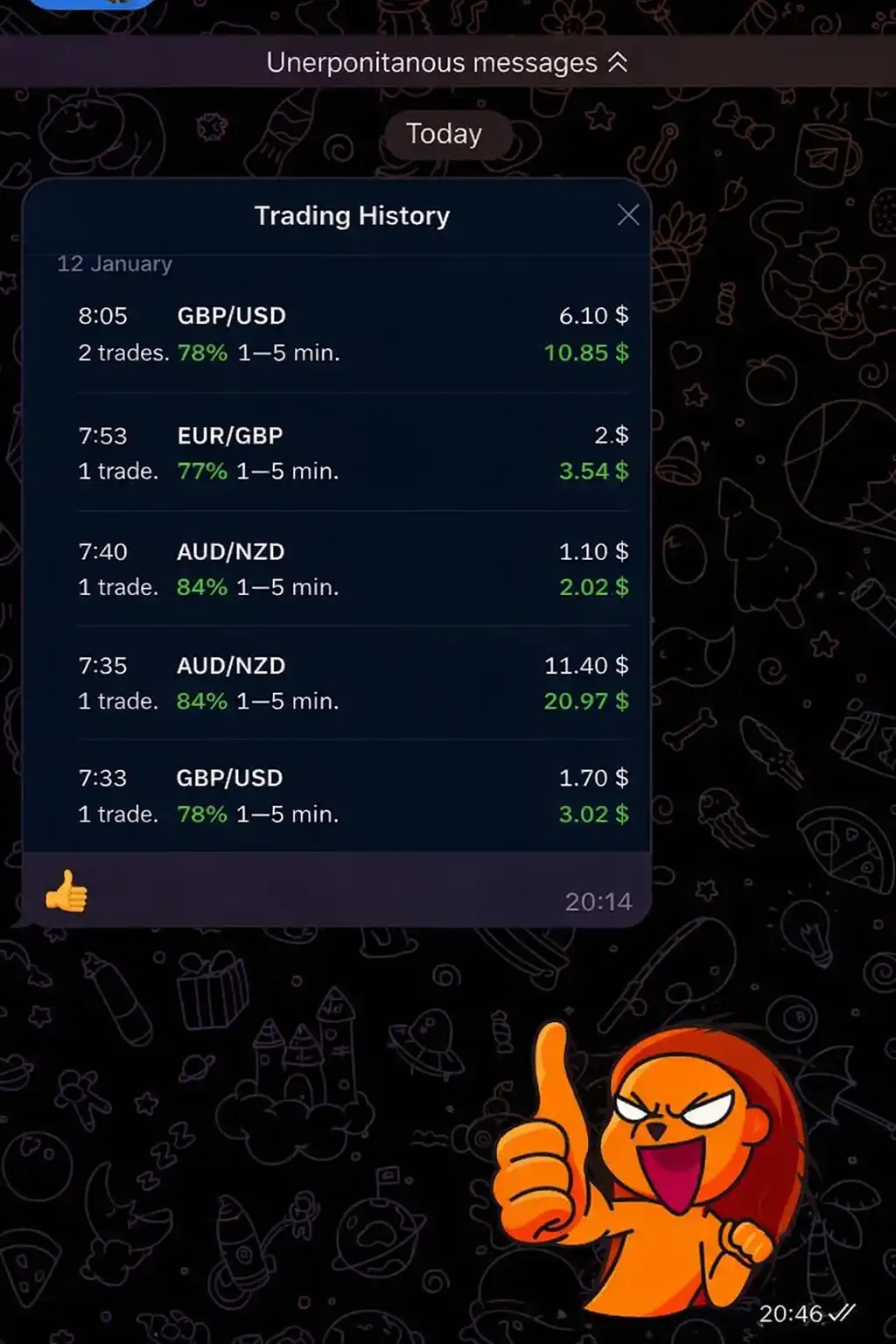
Every day I run two LIVE trading sessions and share signals with portal readers: daytime at 12:00 and evening at 18:00 (UTC+3). Group access is free.
Message me on TelegramResults from our readers
Trading learning plan from scratch: 7 / 14 / 30 days
| Period | Focus | What to do | Move-on criterion |
|---|---|---|---|
| 7 days | Mechanics + discipline | One market, demo account, 3 risk rules (per trade/day/streak), 5–10 short sessions of 20–30 minutes, mistake journal. | You don’t break the loss limit and you don’t chase losses. |
| 14 days | One setup over a distance | One setup, consistent entry conditions, trade stats, 5–10 minutes review after the session, log recurring mistakes. | You have repeatability: you understand why you enter and why you exit. |
| 30 days | System | Refine risk rules, add “when I don’t trade” filters, improve journaling, strengthen emotion control, carefully move to minimal real size (if ready). | You consistently follow the rules and can stop. |
Beginner trading mistakes that break you (and what to do instead)
- Overtrading → set a trade limit and enter only when conditions match.
- Chasing losses → pause and apply the stop rule, not “one more”.
- Switching strategies every day → give one setup 14 days.
- No journal → you won’t know what to fix.
- Trading tired/angry → better skip a day than ruin your mindset.
- Believing in a “holy grail” → a stable process + risk control matters more.
FAQ
1) Can I learn trading from scratch on my own without a mentor?
Yes — if you have a plan and a journal. Without them it turns into “watched — tried — forgot” forever.
2) Demo account practice — how long should I stay on demo?
Until you consistently follow your rules. The key criterion is discipline and repeatability, not a “pretty balance.”
3) How do I start earning from trading from scratch?
Build the process first: demo → risk rules → journal → mistake review. Money is the result of the process, not the desire to “get rich fast.”
4) How to start trading crypto safely in 2026?
Start with basic security (2FA, anti-phishing), liquid assets, and small risk. And always check current conditions for your region.
5) How to trade binary options correctly?
Only with strict rules and limits: no revenge trading, no increasing size after losses, and keep statistics.
Disclaimer
This material is educational. Trading involves high risk and can lead to loss of capital. Do not use money you can’t afford to lose. See details in the disclaimer.
Want to start without chaos and revenge trading?
Start with demo and lock in risk rules from day one. If you choose binary options — you can start on Binarium and apply the promo code TREND (check bonus terms in your account).