Bitcoin: What It Is in Simple Terms

Bitcoin is the first and most famous decentralized digital currency. In this guide, I’ll explain (in plain English) how blockchain works, where to buy and store BTC, what the main risks are, and why understanding Bitcoin helps in trading — including binary options.
What is Bitcoin in simple terms?
Bitcoin (BTC) is digital money that exists only online and isn’t controlled by a central authority like a central bank. It’s a network where people can transfer value directly to each other over the internet — without banks or payment processors in the middle.
The foundation is blockchain — a public digital ledger that stores records of all transactions. Copies of this ledger exist on thousands of computers around the world, making the system transparent and highly resistant to hacking and censorship.
Bitcoin and blockchain: how it works
Think of blockchain as a chain of data blocks. Each new block contains a batch of transactions and a cryptographic reference to the previous block. If someone tried to change an old record, they’d have to rewrite the entire chain across a huge number of computers — which is practically impossible.
The network is supported by thousands of independent nodes. When someone sends Bitcoin, the network verifies transactions and groups them into a new block. Consensus is reached via Proof-of-Work: the “vote” is the computing power contributed by miners.
One key feature is ownership. In crypto, it’s not about an email login or an exchange account — it’s cryptography. If you have your seed phrase (12 or 24 words), you control your coins. Lose it, and funds can be stuck forever. Store it safely offline, and your BTC is yours anywhere in the world.

Who created Bitcoin?
Bitcoin’s creator is believed to be a person or group under the pseudonym Satoshi Nakamoto. In 2008, they published a technical paper (the white paper) describing the system, and in 2009 the first block was mined — marking the start of Bitcoin’s history.
I covered the Satoshi mystery and the early days of the network in a separate guide about who really created Bitcoin and how to use it. If you want the bigger picture and Bitcoin’s “why,” start there.
Why does Bitcoin exist?
Originally, Bitcoin was designed as:
- an independent payment system without bank or government control;
- protection from inflation and unlimited fiat money printing;
- a way to send value without intermediaries and extra fees.
Today, many people also see it as:
- a high-volatility asset for speculation;
- a long-term portfolio component;
- a diversification tool.
How Bitcoin works in practice (and how to use it)
Bitcoin’s price is formed on exchanges through supply and demand — similar to stocks or currencies. The market is open 24/7, and the price can move by double-digit percentages in short periods. You can track BTC charts via exchanges, aggregators, and tools like TradingView.
To use Bitcoin, you need a wallet — basically an interface for managing private keys that control coins on the blockchain.
How to create a Bitcoin wallet and buy BTC
- Choose a wallet type: mobile (Trust Wallet, Exodus), desktop, hardware (the safest option — Ledger, Trezor), or an exchange wallet.
- Install the app or purchase a hardware wallet.
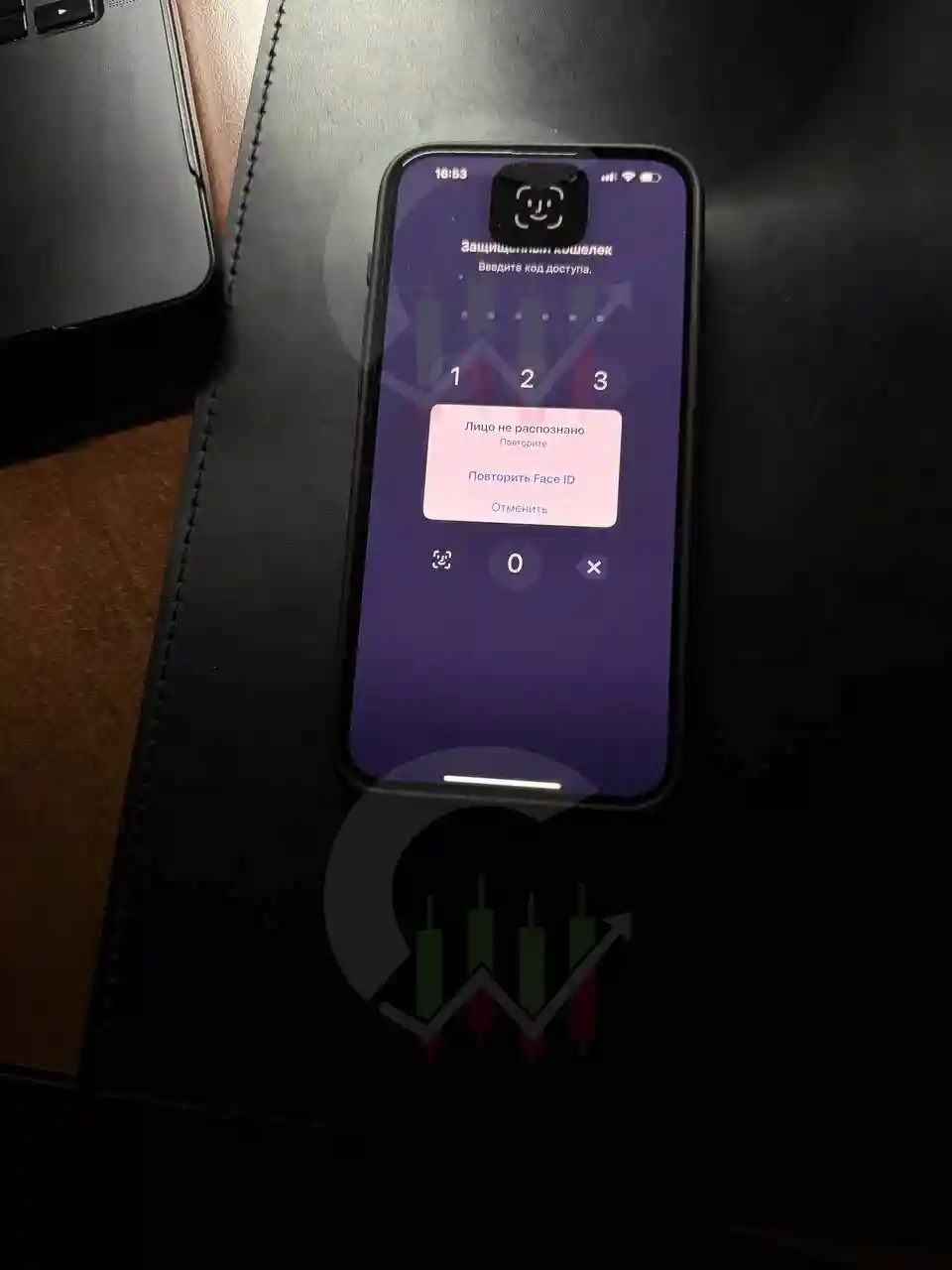
- Generate and write down your seed phrase (12–24 words). Store it offline. Don’t take photos and don’t send it in messengers.
- Fund your wallet. You can buy Bitcoin on major exchanges (Binance, Bybit, OKX), via P2P, or through reputable exchangers.
- You can sell BTC and cash out to fiat through the same platforms — via P2P or direct withdrawal to a card/account (depending on the platform and your region).
How to store Bitcoin safely
Security is critical here: losing access is often irreversible. Basic rules:
- don’t keep large amounts on exchanges — use a personal wallet;
- store the seed phrase offline (paper or metal), no photos or screenshots;
- enable 2FA wherever possible;
- for serious amounts, use a hardware wallet.
How to buy Bitcoin: a simple step-by-step
The most common route is crypto exchanges and reputable exchange services:
- on an exchange: sign up, pass KYC, fund your account, and buy BTC in the market pair you need;
- in an exchanger: swap fiat to Bitcoin at the current rate.
In short: registration → funding → choose a pair → buy. The key is to use trusted platforms — not random “deals” in messengers.
If you don’t want to deal with wallets right away and plan to profit from Bitcoin’s price via trading, starting with extra capital helps you manage risk while learning.
How to sell Bitcoin and cash out
The reverse process is similar:
- sell BTC for USD/EUR/other fiat on an exchange or via an exchanger;
- withdraw to a card, bank account, or payment method supported by your platform.
It comes down to choosing a reliable platform, understanding fees, and staying compliant with taxes where applicable. I also covered how to choose a broker for stocks and crypto in a separate guide.
Bitcoin price and a 2026 outlook
Price tracking and live charts
Bitcoin trades 24/7 — no weekends, no “market close.” You can track BTC price and charts via exchanges, aggregators, and widgets that show real-time movement.
Experienced traders look beyond price: levels, volume, market context, and how other assets behave.
Bitcoin forecast for 2026
“Bitcoin forecast for 2026” sounds nice, but it’s important to be realistic: no one can guarantee BTC’s price on a specific date.
In practice, you work with scenarios — bullish, neutral, and bearish. Long-term dynamics depend on regulation, institutional demand, retail sentiment, and the overall state of the global economy.
Treat any forecast as a reference point — not a ready-made trading plan.
Mining, earning, and investing in Bitcoin
Bitcoin mining: what it is
Mining is the process where specialized hardware solves cryptographic tasks, confirms transactions, and forms new blocks. In return, miners earn BTC rewards.
Today it’s a full-scale industry with expensive equipment, fierce competition, and a strong need for cheap electricity. For most beginners, entering classic mining is often not economically attractive.
How to earn with Bitcoin (and what to invest in)
Common ways people make money with BTC:
- spot trading — buy lower, sell higher;
- mid/long-term investing — “buy and hold”;
- yield services (loans, earn programs, etc.) — higher risk and not for beginners without a plan.
I break down spot vs futures vs margin trading in a larger guide on how to trade stocks and crypto on exchanges, including platform choice and money management.
“Should I buy Bitcoin now?” is always personal: it depends on your horizon (months vs years), your tolerance for volatility, and BTC’s share in your portfolio.
Key risks of investing in Bitcoin
Main risks include:
- high volatility — sharp moves in short timeframes;
- regulatory headlines that can flip sentiment quickly;
- technical risks (exchanges, wallets, and simple user mistakes).
Pros and cons of Bitcoin
Pros
- limited supply — only 21 million BTC;
- decentralized network with no single control center;
- high liquidity and global recognition.
Cons
- volatility that can be painful for unprepared beginners;
- different legal status across countries;
- a learning curve for people new to crypto and tech.
Bitcoin’s legal status in Russia
The question “Is Bitcoin legal in Russia?” comes up a lot. In general:
- you can own, buy, and sell crypto — it’s treated as property;
- you can’t use Bitcoin as an official payment method for goods/services inside the country;
- profits from BTC transactions may be taxable.
Mining can also be regulated, including regional restrictions due to power grid load. Before making serious moves, check the latest legal/tax requirements and consult professionals if needed.
Bitcoin for long-term investing and alternatives
Long-term, Bitcoin is often called “digital gold”: some investors hold it for years as a hedge against inflation and currency devaluation. At the same time, volatility is real — so avoid turning BTC into your only portfolio asset.
Possible alternatives and complements to Bitcoin:
- other cryptocurrencies (Ether and major altcoins);
- stock market — stocks, ETFs, index funds;
- bonds and other conservative instruments.
I also explain crypto types and how they tie into binary options in a separate piece on choosing a market to start trading from scratch.
Why I write about “basic” topics
I’m Konstantin Gromov, and I intentionally publish beginner-friendly guides like “What is Bitcoin in simple terms?” and “How Bitcoin works.” The goal is to broaden the perspective of people who are just entering crypto and trading.
My job is to give you:
- the essentials without fluff;
- an honest view of risk;
- a bridge from theory to real market practice.
If you’re new to crypto, you’ll find both entry-level and deeper practical breakdowns in the blog — including trading psychology and money management.
Articles give you the foundation, but the market moves in real time. If you want to see how I apply these ideas in live trading and react to Bitcoin price changes — join the community.
In Konstantin Gromov’s Telegram channel I share current market commentary, trade breakdowns, and signals that help beginners get comfortable faster.
How understanding Bitcoin helps in binary options trading
Knowing Bitcoin’s nature and volatility helps not only investors but also traders who work with short-term price moves. BTC trades 24/7, often moves aggressively, and reacts strongly to news and key levels.
In binary options, that creates interesting opportunities: you don’t need to predict the exact size of the move — you need the direction over a chosen expiration time. Understanding how Bitcoin behaves as an asset gives a solid base for anyone trying binary options carefully.
I cover risk management and realistic expectations in the guide on risk control and money management 2.0 for Binarium.
Bitcoin and Binarium
Among platforms that offer BTC in a binary format, one worth highlighting is Binarium. It provides a simple “higher/lower” interface and access to popular assets, including Bitcoin.
In this format you can build strategies and test ideas and signals — including prompts from AI bots. When registering on Binarium, you can use the promo code TREND to get a welcome bonus on your first deposit and test your approach with a small amount.
For those starting from zero, Bitcoin can be a great “training asset” because its volatility is clear and it reacts well to levels — but it’s still high risk, so discipline matters.
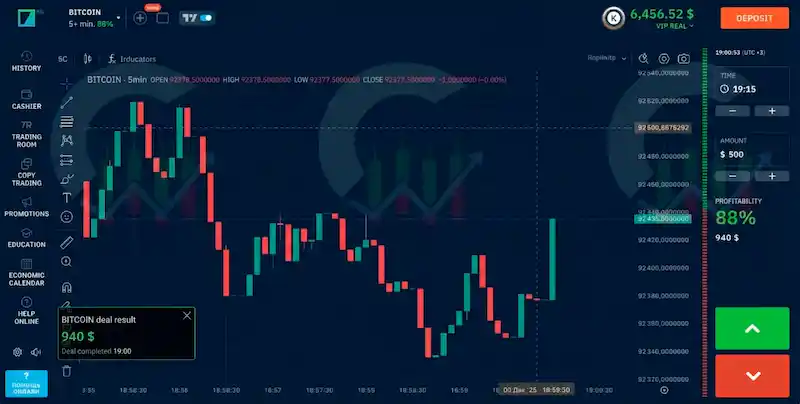
In my materials and trading sessions, I always say the same thing: any platform, including Binarium, is just a tool. Results come from preparation, psychology, and sticking to your rules.
Final recap
In short:
- Bitcoin is decentralized digital money built on blockchain;
- you can learn how it works, set up a wallet, understand where to buy BTC, how to store it safely, and how to cash out responsibly;
- investing in Bitcoin is always a balance of upside and risk — not “guaranteed growth”;
- understanding BTC helps spot traders and long-term investors, and can also support those who carefully try formats like binary options via platforms such as Binarium.
If you prefer a calm, systematic approach without fairy tales about easy money, you’ll find plenty more in this blog — from psychology and risk management to practical strategies and trade breakdowns.
Ready to apply this in practice?
Fund your Binarium account and use promo code TREND to get a +100% bonus and test your strategy in the real market.