What Is FOMO in Trading: How Fear of Missing Out Destroys Your Trading Account

FOMO (Fear Of Missing Out) is the fear of missing a move and “not getting in time.” In trading, FOMO almost always looks the same: you enter not because you have a signal, but because it feels like “it’s going to fly without me.” The result is late entries, chaos, broken rules, and a chain of mistakes.
Disclaimer: this material is educational and not financial advice. Trading is high risk. Learn more
Quick answer
- FOMO is the fear of missing an opportunity and “not getting in.”
- In trading, it pushes you into late trades and entries without a plan.
- Main marker: you can’t explain the entry in one clear system-based sentence, but you really want to click.
- Anti-FOMO: an entry checklist, a 60-second pause, limits, and an emotion journal. If you need a solid base on mindset, start with trading psychology.
What FOMO means in simple terms
In everyday life, FOMO is when it feels like everyone is “making it” and getting benefits somewhere — except you.
In trading it’s faster and harsher: price moves, your brain screams “get in!”, and you can open a trade in seconds — without checking conditions and without fully understanding what you’re doing. If you’re just starting out, it’s worth going through a beginner’s guide first.
What FOMO looks like in trading
Classic examples of FOMO trading:
- “Price moved — I need to enter right now”
- “I missed the start, but I can still catch it”
- “Saw it in a chat/screenshot — so I should copy it”
- “Opened a trade and instantly started panicking”
- “Staring at the chart without a plan, just waiting for a spike”
- “After a couple of wins I start trading more and faster”
- “After a loss I want to get it back quickly — so I enter without a signal”
FOMO loves fast impulses and “liquidity gaps.” If you want to understand why price makes sharp spikes, check the article on imbalance in trading.
Table: how FOMO turns into a mistake
| Trigger | Thought | Action | Result |
|---|---|---|---|
| Sharp impulse | “I can still jump in” | Entering the tail end of the move | Pullback, loss |
| Someone else’s screenshot in chat | “They’re making money and I’m not” | Copying without analysis | No system, random entry |
| A streak of wins | “It’s my day” | Trading more often | Overtrading |
| A loss | “I need to get it back fast” | Entering without a signal | Bigger loss |
Signs of FOMO: a “do you recognize yourself?” checklist
If at least 2–3 items match, you’re probably entering because of FOMO:
- you feel you must enter right now, even though conditions aren’t there
- you can’t explain the entry in one sentence
- you catch yourself thinking “it’s late, but I can still make it”
- you enter without confirmation, “by feel”
- you suddenly increase trade frequency
- you enter after someone else’s signals/screenshots
- after entering you feel fear and fuss
- you want to “add more”
- after a loss you want to “get it back quickly”
- you consume too many sources at once and it pressures you
If this is you, risk management almost always slips too. It helps to put your rules in order — start with money management.
Why FOMO happens (main triggers)
- Market speed — a sharp impulse creates the illusion: “this will continue, I have to catch it.”
- Social media, chats, other people’s results — you stop trading the market and start trading comparisons.
- A missed opportunity — “I could have made money” turns into “I must make money on the next one.”
- Trade streaks — after wins you get overconfident; after losses you want to “get it back.”
Why FOMO is dangerous (and why “just control your emotions” doesn’t work)
FOMO breaks two things you need for consistency:
- Your entry — you enter late, at the tail end, where the move is already “spent.”
- Your discipline — you start breaking rules: no confirmations, changing decisions mid-trade, opening extra trades.
This creates a chain: FOMO → mistake → emotions → another mistake → a streak. That’s why any strategy (patterns/indicators) performs worse without boundaries. Even with classics like the Head and Shoulders pattern, FOMO usually shows up as entering before confirmation because “it’s almost there.”
FOMO vs. a planned trade: how to tell in 30 seconds
| Criteria | FOMO | Planned |
|---|---|---|
| Reason for entry | “It will fly without me” | A signal from your system |
| Can you explain it in one sentence? | No / vague | Yes, clearly |
| Emotion | Rush, fear | Calm |
| Confirmation | No | Yes |
| Is risk calculated? | No | Yes |
FOMO, FUD, tilt, and overtrading: what’s the difference
- FOMO — fear of missing profit → chasing entries.
- FUD — fear/uncertainty/doubt → exiting at the worst moment or freezing instead of following the plan.
- Tilt — an emotional breakdown where you break rules in streaks.
- Overtrading — too many trades (often caused by FOMO or tilt).
By the way, scalping is a high-FOMO zone because everything moves fast. If you trade actively, check the scalping guide and compare your behavior to the rules.
How to beat FOMO: a system (not “willpower”)
1) Entry checklist (the main rule)
I enter only if:
- I can explain the entry in one sentence (“why now?”)
- My setup/condition is there (not “it seems like”)
- There’s confirmation (what you defined in advance)
- Risk is clear in advance and fits my limits
- I’m not “chasing a candle”
- I’m not entering to “get back a loss”
- I’m not exceeding my daily trade limit
If at least one item is “no,” it’s a skip. Skipping is part of the strategy.
2) The “60 seconds vs. FOMO” protocol
When you feel the urge to click:
- Stop for 10 seconds. Don’t click anything.
- One sentence: “Why do I want to enter?” — if the answer is “because it will fly,” it’s FOMO.
- Check: “Where’s the confirmation and why is this a planned entry?”
- Decision: if conditions aren’t there — skip.
3) Reduce noise (the most underrated one)
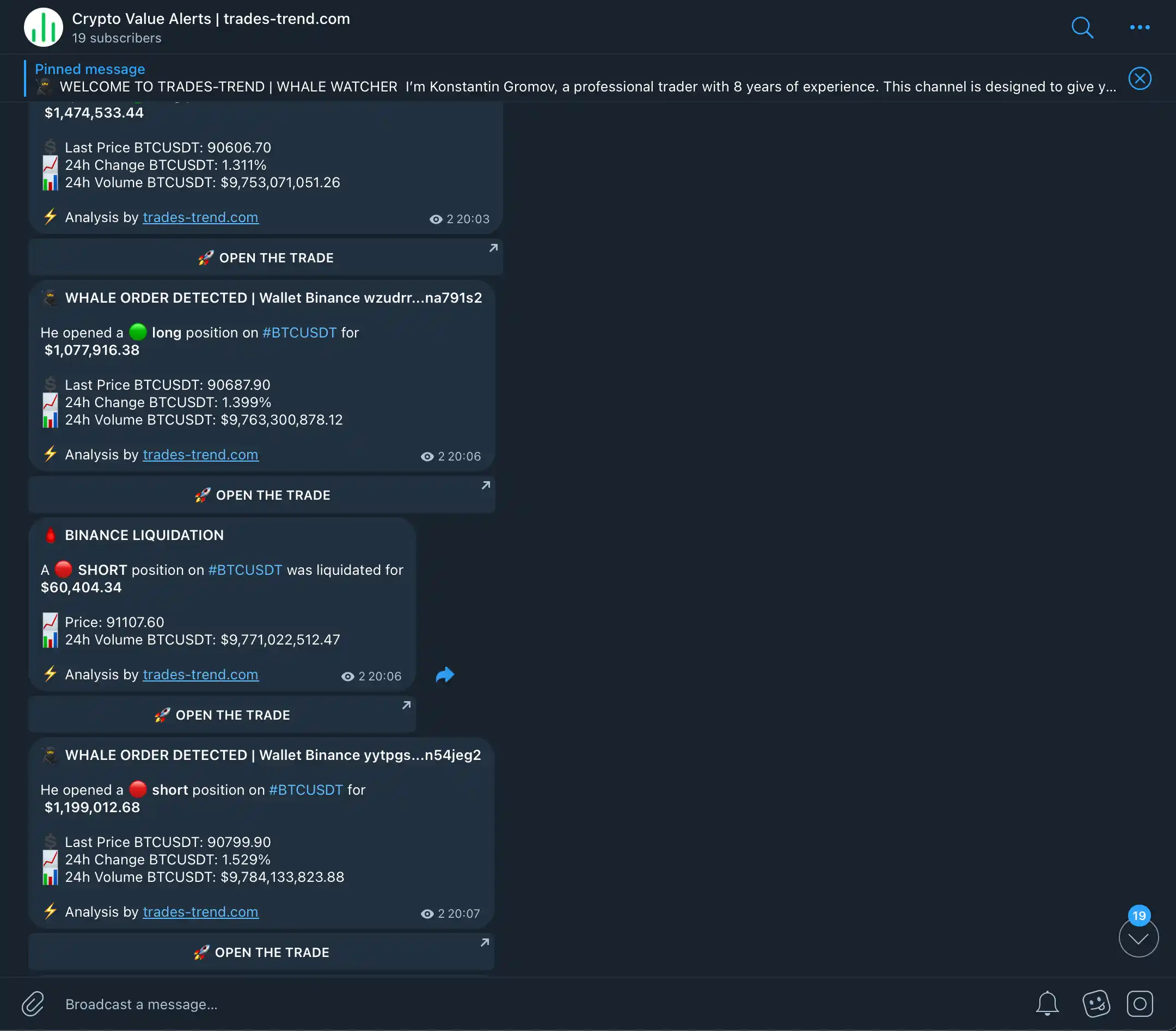
Watch the whales, not the chats
Instead of emotional screenshots — objective data: $1M+ trades, liquidations, and big-wallet movements. The bot sends real-time alerts, so you can see what “smart money” is doing.
Open Whale Tracker Bot- During your trading session, remove chats/feeds
- Set alerts on levels instead of constantly staring
- Trade on a schedule (otherwise your brain will keep “hunting impulses”)
If you like the idea of “reducing emotions through automation,” check algorithmic trading. It’s not a “money button,” but as a concept it helps: fewer manual impulses → less FOMO.
💡 Tip
To train discipline, use a demo or a small deposit. On Binarium you can start small, and with promo code TREND get +100% on your deposit — and practice your system with less stress.
3 examples (short, so it sticks)
Case 1 (bad): Price spiked, I jumped in without confirmation. Pullback — loss. Conclusion: that was FOMO, not a signal.
Case 2 (good): I skipped the impulse, set an alert, waited for confirmation, and entered calmly. Conclusion: missing a move isn’t the problem — a bad entry is.
Case 3 (smart skip): The setup was questionable and I was already at my trade limit. I skipped it. Conclusion: limits matter more than one “opportunity.”
FAQ
What is FOMO in trading in simple terms? ▼
It’s the fear of missing a move that makes you enter late and without a plan. It usually leads to rushed decisions and mistakes.
Is FOMO only a beginner problem? ▼
No. The difference is that experienced traders recognize the impulse faster and switch on rules (pause, checklist, limits).
Can you eliminate FOMO completely? ▼
Emotions will always be there. But you can make sure emotions don’t run your trades: checklist + pause + limits + journaling.
What should you do if you already entered on emotions? ▼
Don’t escalate it: don’t open another trade to “chase it back.” Take a pause, note the trigger in your journal, and return to your rules.
What’s better: skipping a trade or entering late? ▼
Most of the time it’s better to skip. A bad entry hurts your stats more than a missed trade.
Why does FOMO get stronger after losses? ▼
You start wanting to “get it back,” which is close to tilt. That’s where limits and stopping your trading day save you.
FOMO in binary options: when the effect gets stronger
In binary options, FOMO can be even stronger because decisions are instant: you press HIGHER/LOWER, pick an expiry time — and when you’re emotional, that happens in a second. That’s why “safeties” matter here even more: a pause, a checklist, and limits.
I see this in practice every day. In the moment of an impulse, you feel rushed: “it’s leaving right now.” I do one simple thing: I stop for a minute, run the entry through my checklist (one sentence “why this entry,” is there confirmation, am I breaking limits). If even one item doesn’t match — I skip. Skipping is part of the system, not weakness.
If you want to see what trading without FOMO looks like in practice, you can follow my trades and breakdowns live together with readers on the Live Signals page.
📌 Practice without FOMO
To drill your entry system, start with a small deposit. On the Binarium platform, use promo code TREND — you’ll get +100% on your first top-up and can train discipline in real conditions.
Ready to apply this in real trades?
Fund your Binarium account and use promo code TREND to get a +100% bonus and test your strategy.