How Much Does a Trader Earn

The question “how much does a trader earn” always comes down to numbers. But in trading there are two kinds of numbers: a fixed salary for an employed trader and the variable P&L of someone trading their own account. In this article we’ll break down both models, show what really drives results, and give you a step-by-step way to calculate realistic expectations.
Quick answer
How much a trader earns depends on whether they work for a firm or trade independently.
For an independent trader there is no such thing as an “average salary”: results come in a range and drawdowns are unavoidable. A beginner usually doesn’t reach stable income in the first months — they build skill: risk control, discipline, and a trade journal.
A realistic answer comes from expected-value math and solid risk limits. If you’re still choosing a market, start with our instrument comparison to see what fits you best.
How much do traders earn: three scenarios
1) Firm trader (employee)
This is about base pay and sometimes a bonus. Terms depend on the country, the firm, the role, and internal risk management rules. If you want real numbers, pull them from current job listings and salary sites — and always check the date and region.
2) Independent trader (trading your own account)
There’s no fixed paycheck here. You have trading P&L, and it’s rarely smooth: one green week can be followed by two weeks of chop. So the question “how much can a trader earn” is better treated as scenario + risk + statistics, not “salary.”
3) Prop trading / capital under rules
In this model, a firm provides (or grants access to) capital and takes a share of profits, while demanding discipline, limits, and compliance. Terms vary from company to company.

Table: quick scenario breakdown
| Trader type | Income source | Stability | Depends on |
|---|---|---|---|
| Employee (firm) | Salary + bonus | High | Firm, region, role |
| Independent (own account) | P&L from trades | Low | Capital, strategy, discipline |
| Prop trader | Profit split | Medium | Firm rules, limits, results |
How much does a trader earn on average — and why it’s a trap
The query “how much does a trader earn on average” sounds logical, but “average” often misleads:
- people mix salary with trading profits;
- an independent trader’s results are uneven — drawdown periods are normal;
- many count “income” before fees, subscriptions, and taxes;
- the “average” hides the most important thing — drawdown and real risk.
A better question: “With my capital, risk, and trade stats — what’s a realistic outcome range, and what drawdown can I tolerate?”
If you’re just starting and still learning the basics, don’t jump straight to income math. First, cover the core beginner foundations.
What trader income really depends on
1) Capital
Percent returns and real money are different. Even a good system on a small account may not feel meaningful in dollars, while on a larger deposit the same system becomes material. That’s why many traders start with bonuses — for example, when you register on Binarium with the promo code TREND, you get +100 % to your first deposit, which increases your starting capital.
2) Risk per trade and limits
This is the main control lever. If your risk floats, if you chase losses, if you have no daily limit — trading turns into a lottery. The basics are covered in our money management guide.
3) Strategy (entry/exit rules)
A system is not “I feel it.” It’s clear rules: when to enter, when to skip, where the idea is invalidated, and where you take the result. For a visual example of rule-based trading, see our head and shoulders breakdown.
4) Discipline and psychology
FOMO, tilt, overtrading, and revenge trading are direct income killers. Even a great strategy won’t save you if you can’t stay within your rules. Learn more about this in our trading psychology section.
5) Costs
Fees, spreads, slippage, subscriptions, and taxes (where applicable) — all of this eats into results and turns a “nice green” into something much smaller after costs.
How much does a beginner trader earn
Most often, this question hides a simple expectation: “I want stable income like a salary.” But reality is different:
- the first months are usually uneven;
- for many beginners, the goal should be not “to earn,” but not to blow up the deposit;
- progress starts when you have risk rules, a journal, and limits.
What to do instead of “where’s my salary?”
- Pick 1–2 assets and stop jumping around.
- Set a daily trade limit.
- Ban revenge trading.
- Keep a trade journal.
- Review mistakes once a week.
If you trade on Binarium, try using the promo code TREND when funding — the +100 % bonus can give you extra breathing room for your first steps.
How much does an experienced trader earn
An experienced trader usually has fewer “swings” in results. The difference is that they:
- trade less, but strictly to plan;
- don’t damage the account with emotions;
- know when not to trade;
- track statistics and understand their expected value.
In other words, experienced traders don’t earn because they “guess” — they earn because they avoid unnecessary mistakes.
How much does a successful trader earn
“Successful” doesn’t mean “green every month.” It means preserving capital, keeping drawdowns within reason, and showing positive results over time through discipline.
Sounds boring? That’s because it’s real. “Pretty numbers” usually break after one streak of emotional trades.
How much does a professional trader earn
This question usually means one of two things:
- Professional = works at a firm — then it’s salary + bonus. Numbers depend on listings, salary aggregators, region, and the date.
- Professional = trading as the main occupation — then “professionalism” is measured by process: risk, discipline, stats, and ongoing work on mistakes.
How to estimate “how much a trader can earn” (5 steps)
This is not a forecast and not a promise. It’s a way to remove self-deception and get a clear benchmark:
- Define your capital — how much money is actually in the account.
- Set a fixed risk per trade — the same every time.
- Use win rate and R:R from testing or statistics. If you have no stats yet, test first — otherwise it’s guessing.
- Estimate the number of trades per month you can realistically take by the rules (not “whenever”).
- Subtract costs — fees, spreads, subscriptions.
At the end you don’t get a “salary,” you get a range that depends on discipline. Two traders with the same strategy can get different outcomes simply because one breaks the rules.

If you’re interested in tools that help you trade more systematically (alerts, charts, preparation), check our article about trading bots.
What eats your income?
| Cost | Impact | What to do |
|---|---|---|
| Fees | Eat small gains | Include them in every calculation |
| Spread | Worsens the entry | Trade liquid instruments |
| Slippage | Increases losses | Use limit orders |
| Subscriptions / software | Fixed monthly cost | Validate the real need |
| Taxes | Reduce net profit | Factor them into the final result |
7 rules to make income real, not random
- Don’t confuse salary with profit.
- Set a fixed risk per trade and don’t change it emotionally.
- Set a daily trade limit.
- Ban revenge trading.
- Trade 1–2 clear setups.
- Keep a journal.
- Judge yourself by the long run, not by one day.
If you trade binary options, income depends even more on discipline, because it’s easy to overtrade, enter on emotions, and chase losses after a red trade.
Take a look at how I trade. Every day for our readers I run two trading sessions — daytime at 12:00 and evening at 18:00 (MSK). Access to the group is completely free; there are no paid groups. If you want to join LIVE trading and receive my signals, message me on Telegram or follow the signals on the Live Signals page.
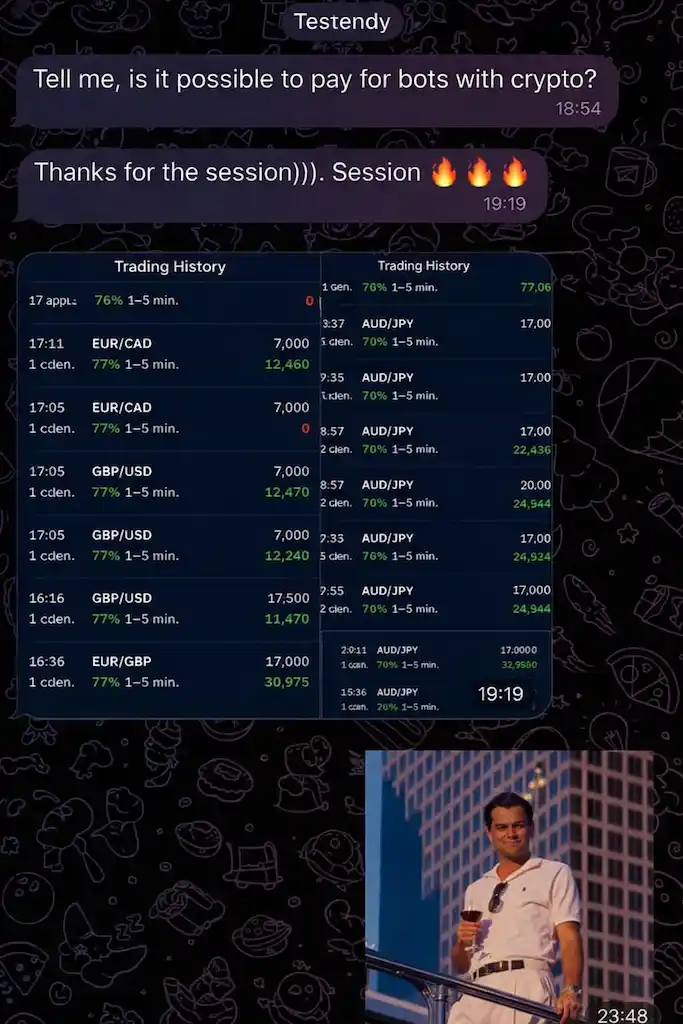
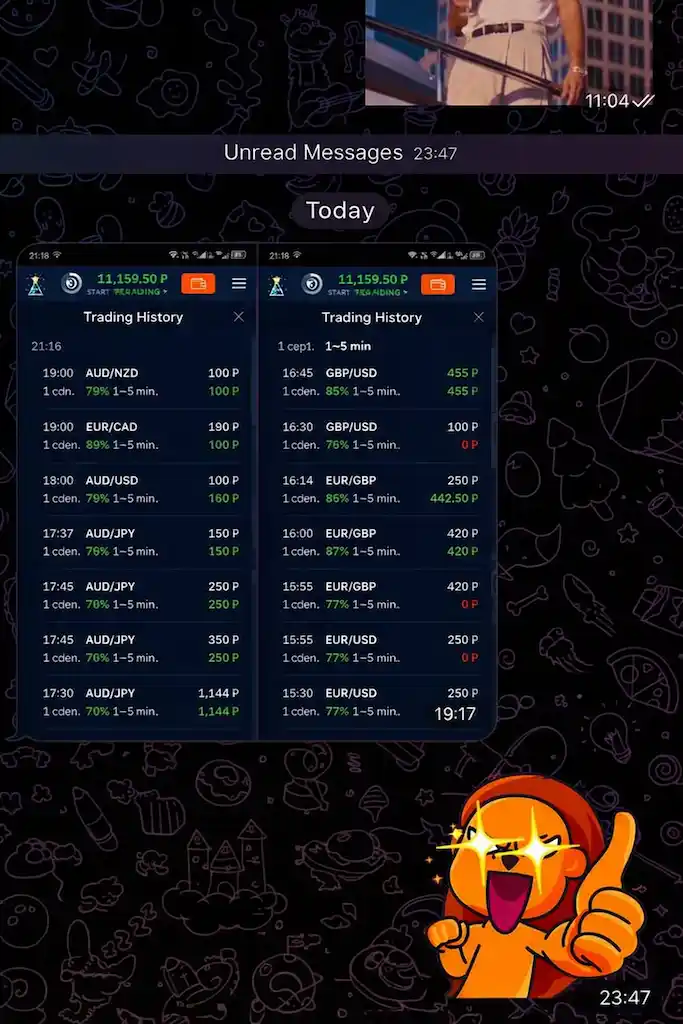
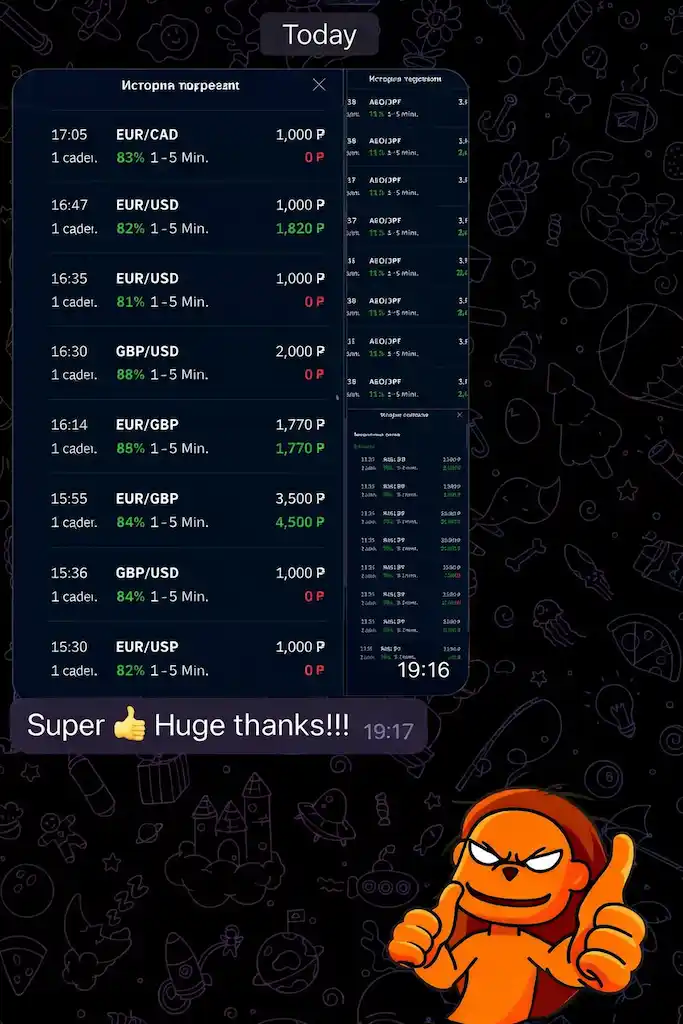
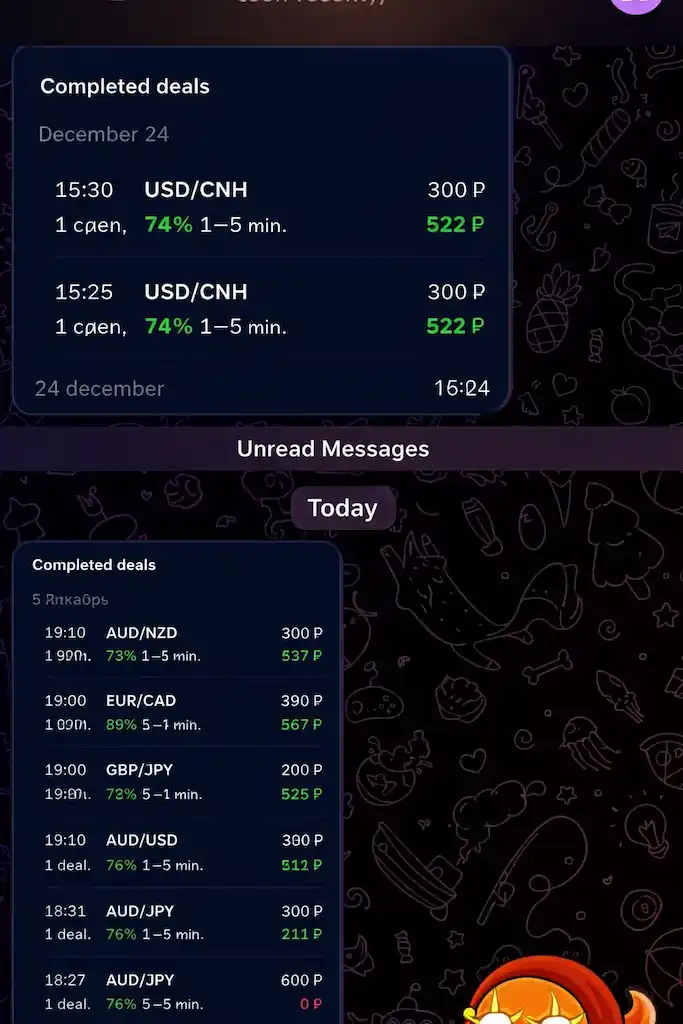
By the way, here are results from our readers:


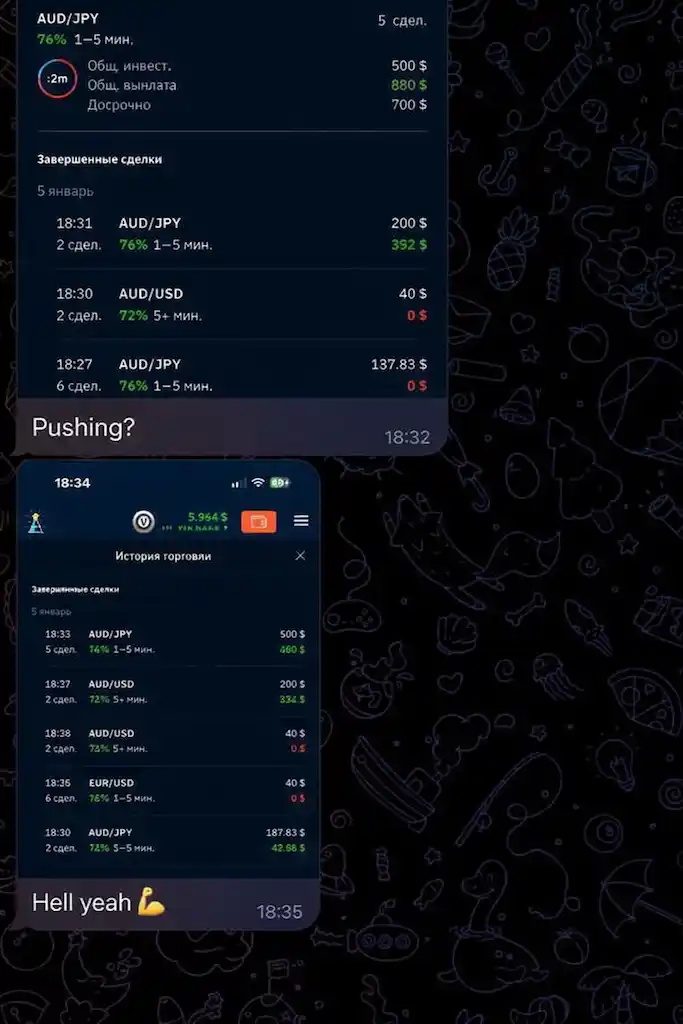
← Swipe to view →
Ready to put this into practice?
Fund your Binarium account and use the promo code TREND to get a +100% bonus and test the strategy.